4 Garden Cushion Storage Ideas (So They Don’t End Up In A Heap By The Back Door)
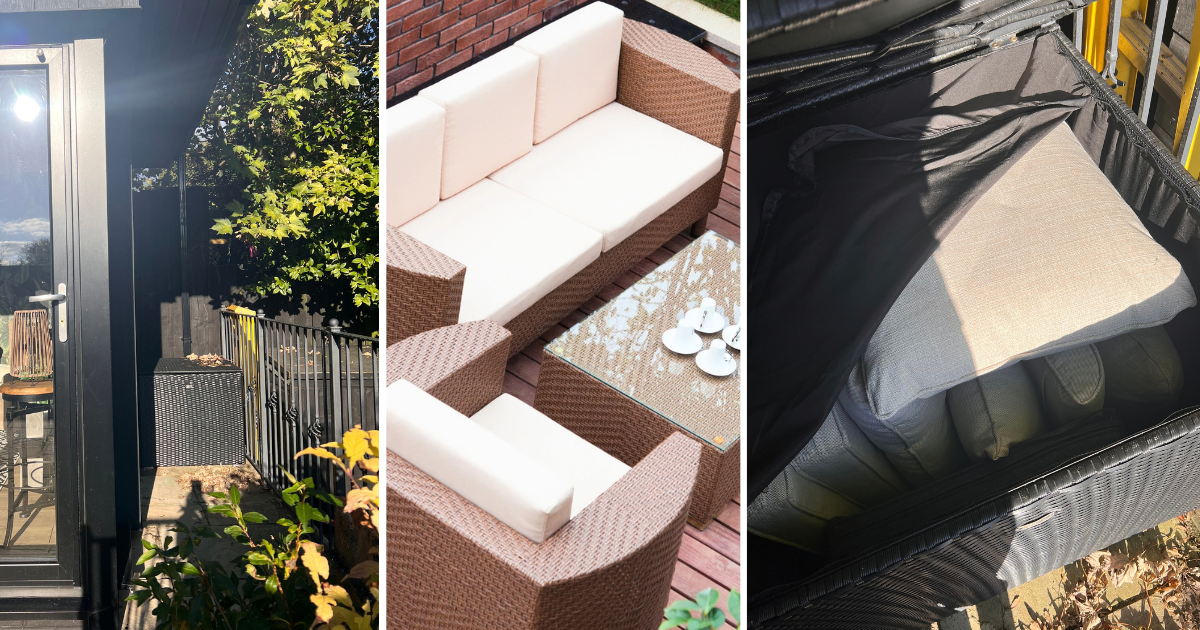
Garden cushion storage ideas that keep them dry and mould-free, plus the popular option that does more harm than good, and why a mouse once moved into ours.
* This post may contain affiliate links. They don't cost you a penny, but do pay a commission to this site.
Please click here for more details.
You know the moment. The sky turns that flat grey that means rain in the next twenty minutes, tops, and you’re out on the patio in your socks, scooping cushions off the garden chairs before they get soaked. Again. Because the last lot spent a fortnight out in the wet and came in smelling like a damp tent.
And there’s nowhere sensible to put them. The shed’s full. The under-stairs cupboard’s already got the recycling in it. So they end up in a heap by the back door “just for now”… which somehow turns into three weeks.
Garden cushions are only worth having if you can get them out fast when the sun appears, and get them away just as fast when it doesn’t. That’s the real problem with most outdoor cushion storage. It’s either quick to use and useless in the rain, or properly protective and such a faff that you stop bothering by week two.
Here are four ways to solve it, for whatever your garden and budget allow.
What Are The Main Issues When It Comes To Storing Outdoor Cushions?
Before doing anything else, it’s worth spending time knowing what problems you’re trying to solve. That way, when you think about the solution for your own cushions, you’ll know whether it definitely solves what you need it to.
- IN CONSTANT USE – They go out and come back in constantly over the summer, so the storage has to be easy to use. If it isn’t, it stops getting used pretty quickly.
- WEATHER DAMAGE – Left out in the rain, or bundled under a tarpaulin, cushions lose their colour, go stiff and start to smell musty.
- WATERPROOF ISN’T DAMP-PROOF – Airtight storage can trap moisture in just as easily as it keeps the rain out, so “waterproof” on its own doesn’t mean they’ll stay in good condition.
- UNINVITED GUESTS – Left out over winter, cushions make a genuinely inviting spot for mice and other pests to nest in. Ask me how I know. We left a set out one winter and found a very cosy mouse in there come spring. Lesson learned.
- NO TWO SETS ARE THE SAME – Every set of cushions is a different size, shape and quantity, so “one size fits all” storage rarely actually fits.
What Needs To Be Considered When Storing Outdoor Cushions?
There are lots of things to think about when choosing storage for any stuff in your home – but these are the ones that are crucial when it comes to garden cushions.
- MEASURE THEIR VOLUME – Pile them up the way you’d store them and measure that, so you get the right size first time. There’s nothing worse than finding the last two cushions won’t go in.
- HOW OFTEN YOU’LL NEED THEM – Daily summer use needs something within arm’s reach of the seating. A winter pack-away doesn’t.
- BREATHABLE, NOT JUST WATERPROOF – A fully sealed bag or box with no airflow at all can cause more mould, not less.
- HOW SECURELY IT CLOSES – Gaps at zips, flaps and lids are exactly where mice get in over a long, cold winter.
- WHERE IT’LL ACTUALLY LIVE – Anything next to the seating area needs to look reasonably good. Something tucked in the corner of the shed doesn’t.
Best Outdoor Cushion Storage Ideas
So, now you know what to consider: quick access, real weather protection, breathable rather than just waterproof, and pest-proof over winter.
When you’re weighing up which option works for you, it really comes down to three things. How accessible you want the cushions to be, how much space you’ve got, and what you’re happy to spend.
#1 – A Dedicated Outdoor Storage Box
Get one sized properly for your space, and decide early on whether it’ll be hidden away or on show, because that sets the colour and size you go for.
A good outdoor storage box earns its keep as extra surface space, or occasional seating, when you need it. The catch is that it needs a permanent spot, so you do need the room to give it one in the first place.
This is what I have in my own garden, as it fits neatly out of the way next to our garden room:
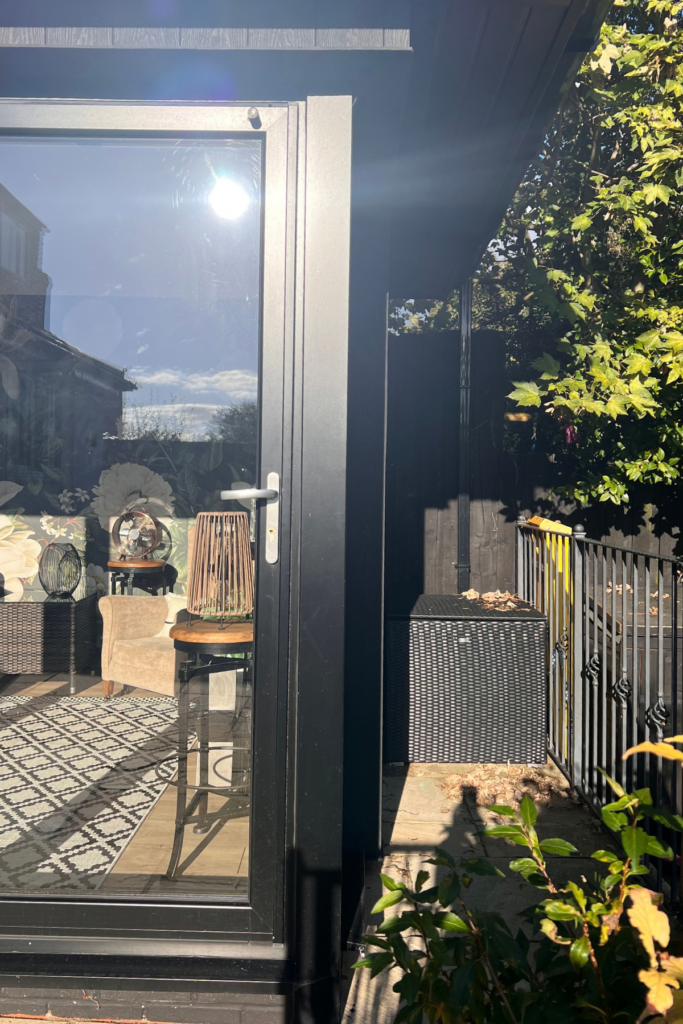
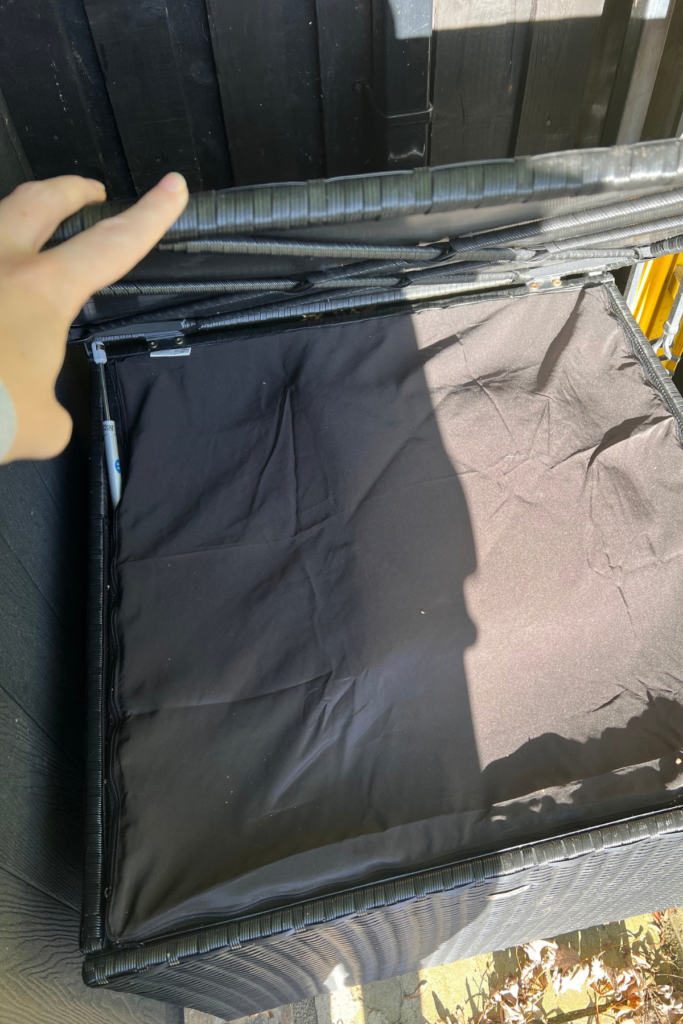
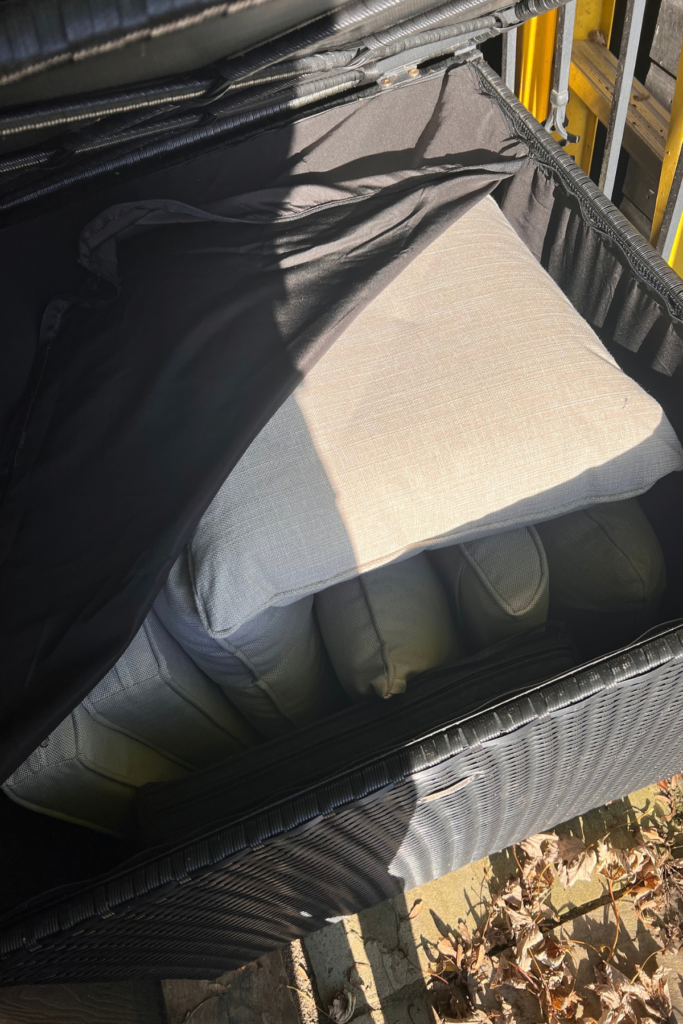
Best for: anyone who wants one proper answer that doubles as extra seating or surface space, as long as there’s room to give it a permanent home.
#2 – A Storage Bench
A garden storage bench that has a lift-up lid gives you easy access to the cushions underneath, and because it doubles as seating, it takes up barely any extra space.
It’s just not as comfortable to sit on as proper garden furniture, so it’s probably best to think of it as storage that happens to seat someone, not your main seating.
Best for: smaller gardens where you can’t justify the space for both seating and separate storage.
#3 – A Bag Under Your Existing Furniture
If there’s a gap under a bench, sofa or daybed, a flat storage bag slides straight in and saves you buying anything new.
The downside is access. If the furniture isn’t easy to shift, you end up wrestling it out of the way every time you want a cushion, and that gets old fast.
Remember that your bag will need to be waterproof if stored this way, as most garden furniture will allow water to flow through the weave.
Best for: gardens with no spare space at all, where saving room matters more than quick, easy access.
#4 – A Bag Inside A Shed Or Garage
Easy to carry and easy to tuck out of sight, but a full set of cushions is bulkier than it looks, so you’ll still need a decent chunk of space free inside.
Whatever bag you use, go for breathable rather than fully sealed. Otherwise any leftover damp gets trapped against the fabric, and that’s exactly how mould starts.
For storage bags that are stored inside, you don’t have to worry about them being waterproof – so you can think about saving a little cash that way.
Best for: anyone with shed or garage space going spare who’d rather not buy new garden furniture.
So really, it comes back to those same three things: access, space and budget. For most people, the best option is a dedicated outdoor storage box – sized properly, kept near the furniture, and tucked just out of the way rather than front and centre. But if space is tight or you’re not ready to spend, any of the other three will genuinely do the job.
What To Avoid: Vacuum-Sealed Bags
Vacuum-sealed bags promise to shrink a whole set of cushions down to almost nothing, which sounds ideal for storing bulky cushions.
But the specific issue with this is that because they’re completely airtight, that’s the opposite of what outdoor cushions need.
Any leftover damp on the cushions will get sealed in, and because the bag’s shut tight, you won’t spot a problem until you open it next season and find the mould’s already set in.
If you’re set on trying them, only ever use them for cushions you’re certain are bone dry, and check on them more often than you’d think. For anything stored for a full season or over winter, one of the other four ideas above will serve you far better.
FAQs
How do I stop mice getting into cushion storage over winter?
Check the zips, lids and seams, because that’s where they get in, not through solid fabric or plastic. A lidded box or bench with a tight-fitting seal is the safest bet for anything left out all winter. Covers and bags are more vulnerable as they can nibble through fabrics more easily.
How do I stop stored garden cushions going mouldy?
Make sure they’re completely dry before they go into any storage, and choose something waterproof but breathable rather than fully sealed. A bit of airflow is what actually prevents mould, not just keeping the rain off.
Do waterproof cushion covers actually work?
For short-term, in-place protection – overnight, or a wet weekend – yes. For anything left out for weeks at a time, especially over winter, a box or bench is the better call.
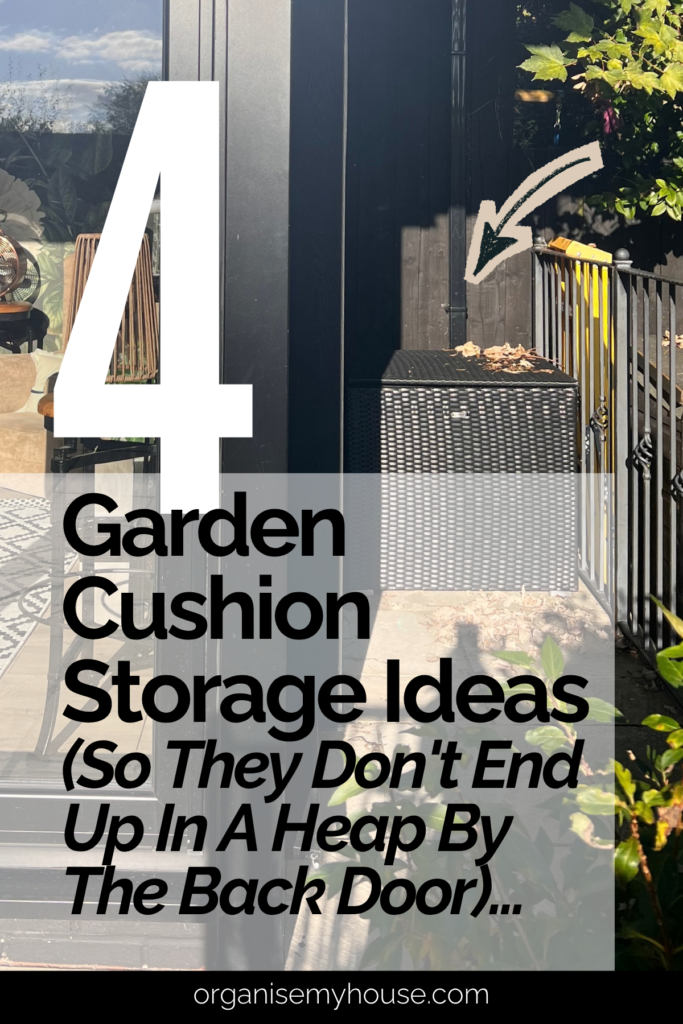
No More Heap By The Back Door
Back to that pile of cushions by the back door. It doesn’t have to be a choice between “quick to grab” and “properly protected”.
Weigh up how accessible you need them, how much space you’ve actually got and what you’re happy to spend, and there’s an option here that does both.
Measure the pile. Check it’s breathable, not just waterproof. And make sure whatever you choose closes properly.
That’s the difference between cushions that last for years and a mouse story of your own.
Got The Bins To Sort Out Too?
If the cushions were bothering you, there’s a good chance the wheelie bins are too. Here’s how to get them out of sight, whatever the size of your garden.