5 Realistic Pantry Organisation Ideas To Think Through Before You Get Started
Before you start setting up or sorting out your pantry, these are the five things worth thinking through first, so you end up with a setup that actually works for how you shop, cook, and live. These are realistic pantry organisation ideas that will make all the difference to how good yours works for you each and every day…
* This post may contain affiliate links. They don't cost you a penny, but do pay a commission to this site.
Please click here for more details.
Pantry organisation is having a moment on social media for sure – and most of it starts in the same place:
Matching containers, decanted everything, labels on every jar, colour-coordinated shelves that look like they belong in a lifestyle magazine.
It looks incredible. Absolutely lovely.
It also, in most real kitchens, lasts about three weeks before the system collapses under the weight of an actual food shop(!).
The problem isn’t that people can’t organise a pantry. It’s that they jump to the aesthetics before they’ve thought through the fundamentals, and a beautiful system that doesn’t fit how you actually shop and cook will always unravel.
So before you buy a single container or move a single tin, here are five things worth thinking through first.
Get these right and the setup almost sorts itself.
1 – To Decant Or Not – Be Honest Before You Commit
Decanting is the pantry organisation move that gets the most airtime, and for good reason.
A shelf of matching containers does look genuinely beautiful – I love the look of it.
But there’s a side that isn’t talked about as much – and it’s worth being very honest with yourself about whether it’s actually right for you before you invest the time and money.
Because decanting adds a task to your day.
Every time you do a food shop, you’re not just unpacking the bags – you’re also having to transfer things into containers.
This takes time and effort on top of an already existing job.
Not to mention if you buy more than fits in the container, you have to store the excess somewhere, which is often less tidy than the original packaging ever was.
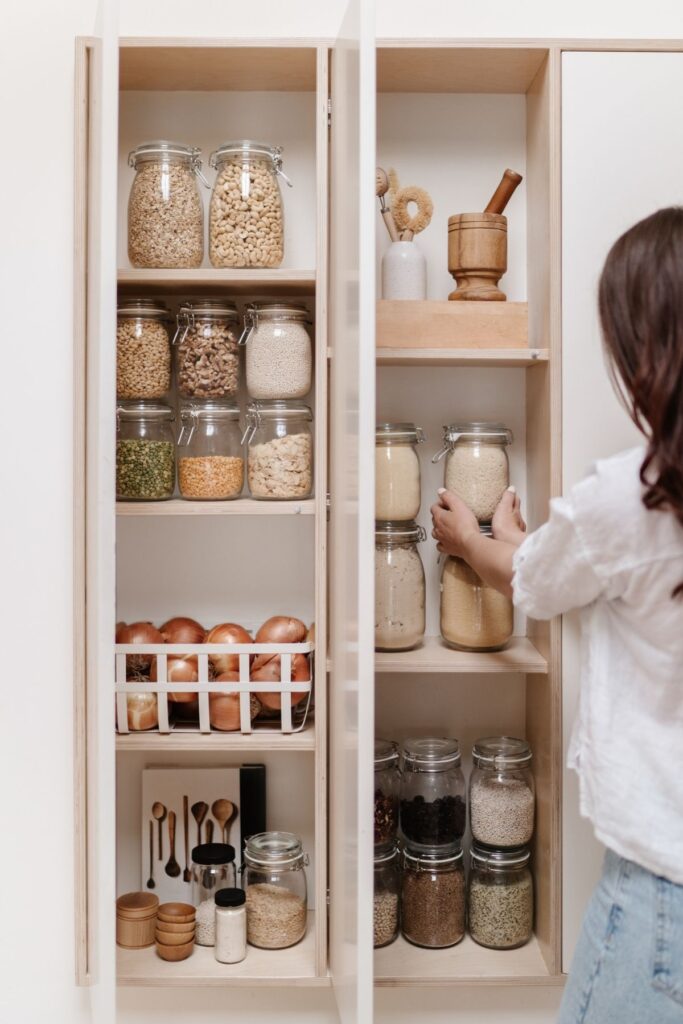
I don’t decant.
I’ve tried it and the maintenance cost (the refilling, the cleaning the containers, the figuring out what’s in the jar when I’ve lost the original label) far outweighs the visual satisfaction for me.
My pantry looks perfectly functional without it.
I know where things are, I can see what I have, and putting the shopping away takes the least amount of time possible.
Now don’t get me wrong – if you genuinely love decanting and will maintain it (if the ritual of it feels good and the visual result matters to you) then absolutely go for it.
But, if you’re doing it because the internet says you should, or you feel it would be ‘better’ but aren’t exactly sure why, then save yourself the containers and the faff.
The honest question to ask yourself: Would I actually do this every single week, when I’m tired after a food shop, for the foreseeable future? If the answer is uncertain – skip it.
2 – Where’s Your Pantry? – Think Creatively!
Most people who say they don’t have a pantry actually do. It just doesn’t look like the walk-in larder of their dreams.
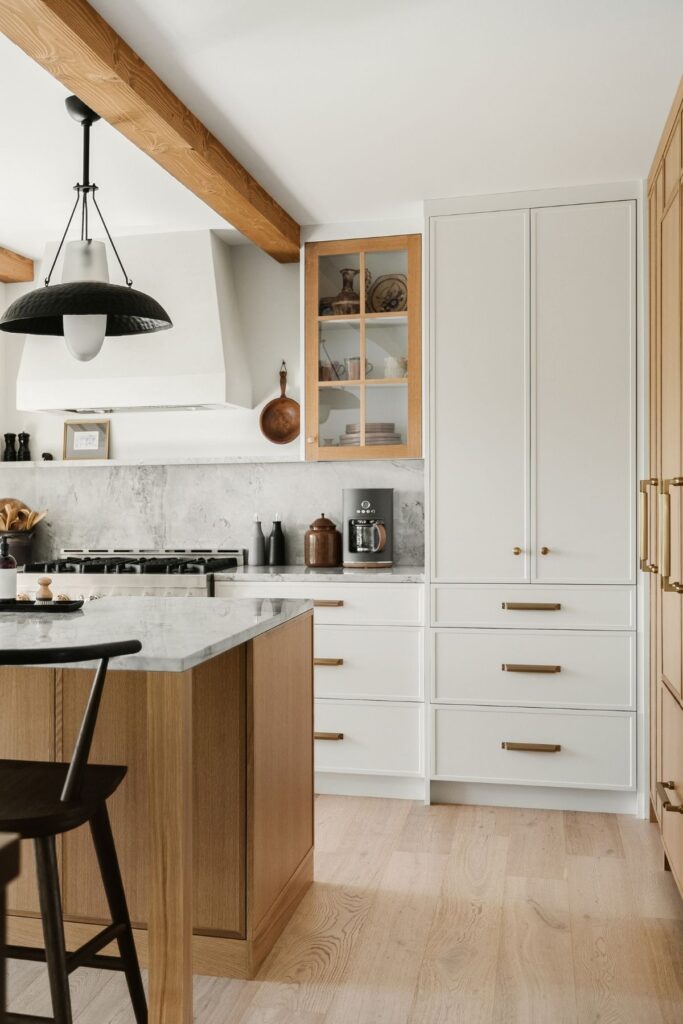
I don’t have a dedicated pantry space, but a tall kitchen cupboard does exactly the job we need it to.
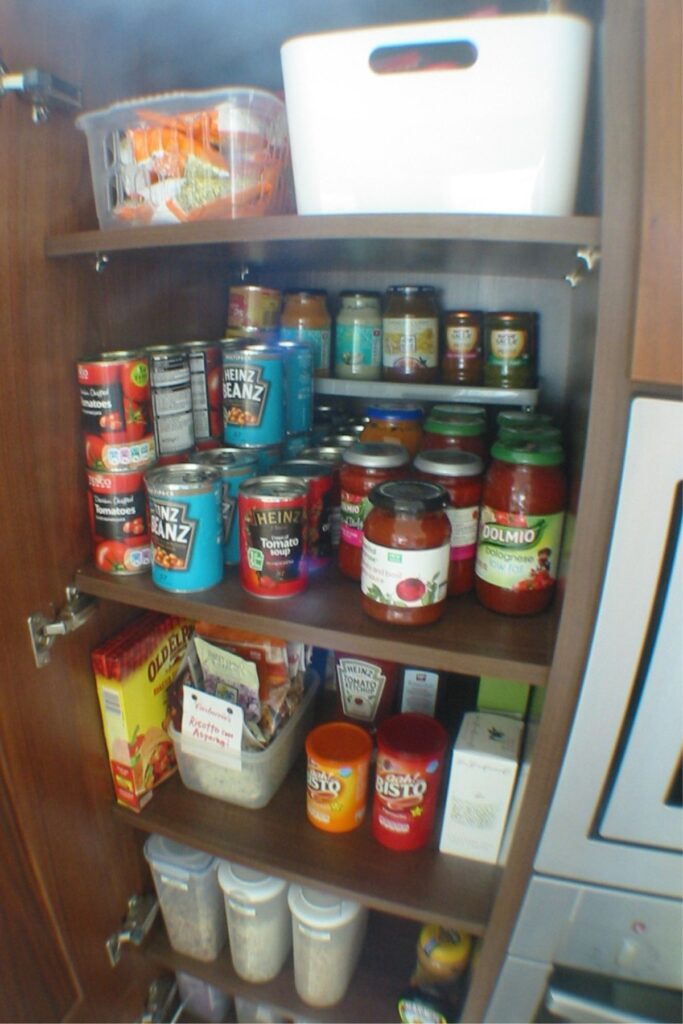
The whole cupboard is given over to food storage, it’s organised properly, and it works brilliantly for us as it’s right next to the fridge and cooker and work surface.
You see, a pantry doesn’t have to be a room or even a specific pantry-style unit. It just has to be a dedicated space with enough room to see and reach what you have.
If you don’t have a spare kitchen cupboard, think a bit wider:
- A standalone shelving unit in a corner of the kitchen or a utility room.
- A free standing cabinet in the kitchen, or dining room.
- A section of garage shelving for the overflow items (as you don’t want to have to go to your garage every time you need something) – tins, excess stock, things bought in bulk.
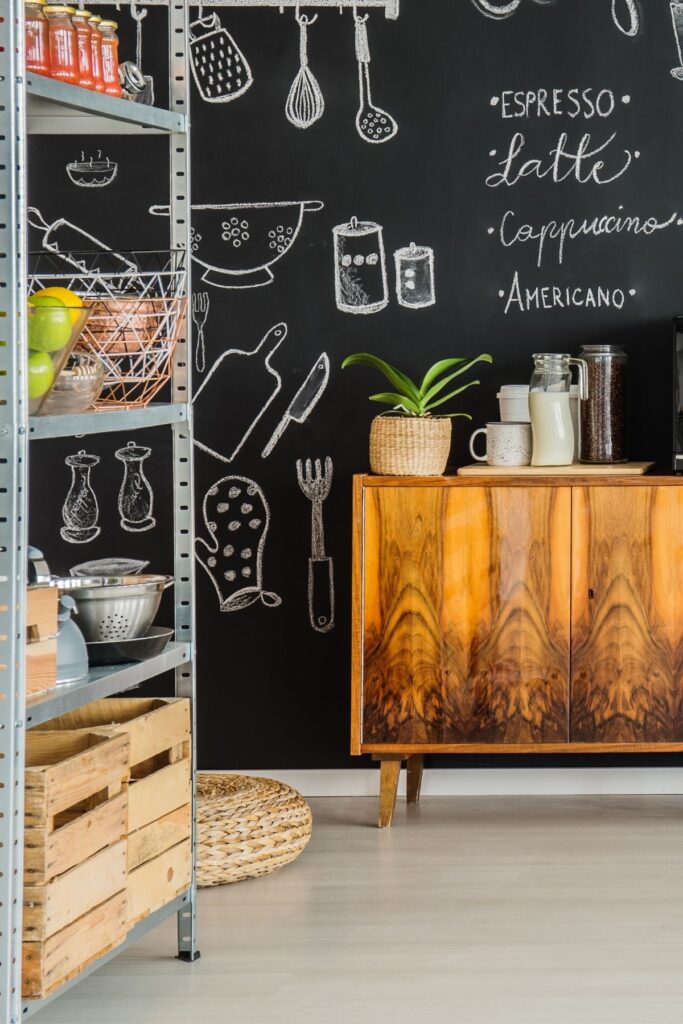
Because the space doesn’t have to be in the kitchen to function as pantry storage.
The key is that it’s dedicated pantry style storage, and that it’s somewhere you’ll actually use rather than somewhere you’ll forget about.
Think about: Where do you naturally want to reach for food when you’re cooking? The storage should be as close to that point as possible. Convenience drives consistency.
3 – Space For What You Actually Use – Not What The Internet Uses
This is the one that gets skipped most often, and it’s arguably the most important.
Your pantry should be set up for what your household actually eats and buys, not a generic version of what a pantry is supposed to contain.
That sounds obvious, but pantry organisation content tends to show a very particular kind of pantry: lots of jars, lots of grains, a spice section, uniform everything. And it’s easy to unconsciously use that as the template even when it doesn’t match your actual kitchen.
In our house, for example, we use a lot of tins. As such, tins get significant space – multiple shelves, easy to access, clearly arranged.
On the other hand, we don’t have many snacks because we’re not big snackers – so snacks get a small tub at the bottom of the cupboard, not a dedicated large section.
Our pantry reflects us – not what we ‘should’ have.
So, before you set anything up, take a moment to look at what you actually need space for.
What do you need a lot of? What do you rarely buy? What takes up space it doesn’t deserve?
That way you can build the storage around your reality rather than around what looks good in someone else’s pantry.
Do this first: Before moving anything, take stock of what’s actually in your current food storage and note what you have a lot of versus what you barely have at all. Let that ratio guide how much space each category gets.
4 – Heavy At The Bottom, Light At The Top – And Prize The Middle
This is a simple rule that makes an enormous practical difference to how usable a pantry actually is day to day.
Heavy items (tins, jars, bottles, anything with real weight) go at the bottom. They’re easier to retrieve from low down, they don’t create a hazard if they topple, and they’re often the things you’re reaching for less frequently.
Light items (packets, cereal boxes, lighter tins) go at the top. You can see them, they’re easy to reach, and their weight doesn’t make them awkward at height.
But the real premium space is waist to shoulder height.
This is the zone that’s most visible and most accessible – the area where your eye naturally goes when you open a cupboard, and where you can reach without bending down or stretching up. Whatever you use most frequently should live here. For most people, that means the everyday staples: pasta, rice, oils, the tins you open every week.
The goal is a pantry where getting things out and putting things away takes as little effort as possible. Every unnecessary bend, stretch, or shuffle to reach something is a small friction – and frictions compound into a pantry that feels like a faff to use rather than a pleasure.
The rule: Most used items at the most accessible height. Least used items above and below. Review it honestly – if you find yourself reaching past things to get to what you actually need, the zoning needs adjusting.
Want to reduce frictions in your home, and set things up for you-now? The Feel Good Home is your perfect next step.
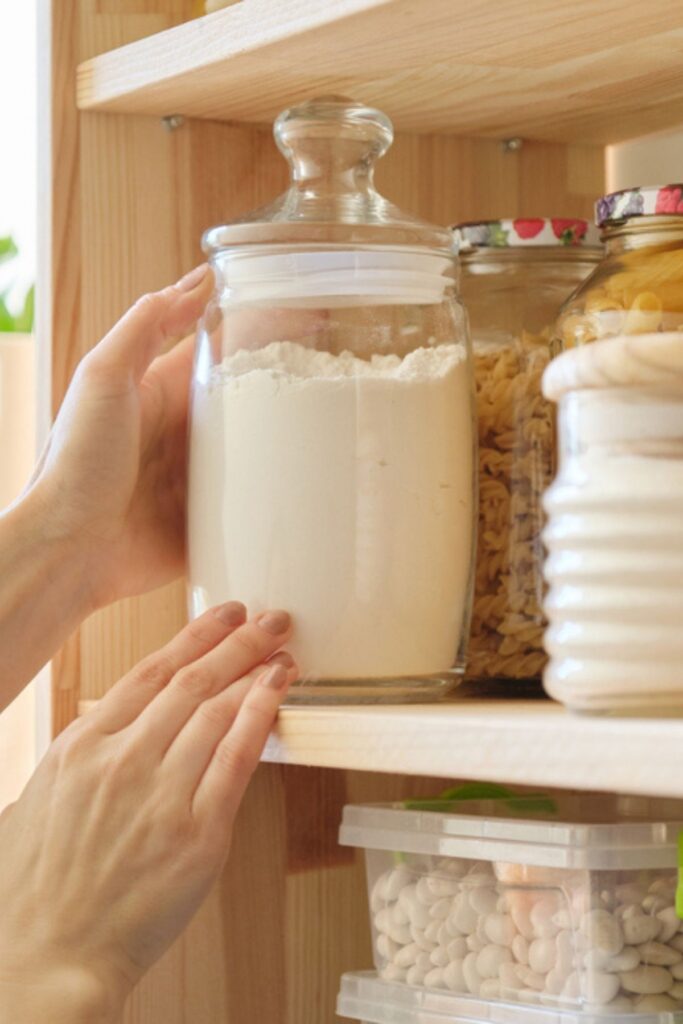
5 – Add Layers So You Can See Everything At Once
One of the most common reasons pantries stop working is that things at the back become invisible.
The tin you forgot you had. The packet you bought a second of because you couldn’t see the first. The thing that went out of date because it got pushed to the back and stayed there.
The fix is simply to use layers.
Adding extra levels within each shelf so that more items are at the front and visible rather than hidden behind each other.
And it doesn’t require an expensive solution.
Things like stepped shelf risers that let you see the row behind, under-shelf hanging baskets that create storage where there wasn’t any before, and small turntables (lazy susans) that bring the back of the shelf to the front with one spin – are all fantastic additions to help you use the space efficiently.
I particularly like under-shelf hanging storage because it genuinely creates extra space from nothing – items hang below a shelf rather than sitting on one, which means you’re using the vertical space inside the cupboard rather than just the shelf surfaces.
The principle throughout is simple: the more easily you can see what you have, the quicker everything runs:
- You spot what’s running low before it runs out.
- You don’t buy duplicates of things you already have.
- You can do the food shop and put things away in the right place because the right place is obvious.
A pantry where everything is visible is a pantry that practically manages itself.
Start here: Before buying any new storage, stand in front of your current setup and note what you can and can’t see at a glance. The things you can’t see are the things that need a different solution – whether that’s a riser, a turntable, or simply moving them forward in the space.
Worth a read: Kitchen Cupboard storage ideas to try today!
And that’s it!
None of these five things require a big budget or a dedicated pantry room.
They simply need a bit of honest thinking before you start – about how you actually shop, what you actually eat, and what would genuinely make daily use easier.
Get those fundamentals right and the pantry almost organises itself.
Get them wrong and no amount of beautiful containers will make the system stick.
Think first. Organise second. In that order, every time.
Read next > How I added a Pantry to my kitchen – without needing any extra room…