
5 Popular Organising Ideas I’ve Tried – But Won’t Be Doing Again
Five popular organising ideas I’ve tried, tested, and finally let go of – and the honest reasons why each one cost more effort than it was worth for me. Real opinions, real pros and cons, and exactly what I do instead. The question is – do you agree?!
* This post may contain affiliate links. They don't cost you a penny, but do pay a commission to this site.
Please click here for more details.
I have MANY opinions about organising. After twenty-odd years of doing this for a living, that’s probably not a shock.
What I’ve also got (and this is the bit that matters more) are pet hates.
Things I’ve tried, genuinely thought I’d love, and decided just aren’t worth it for me. Not because they’re inherently wrong, or because anyone doing them is wrong, but because the daily or weekly upkeep they demanded from me costed more than I was willing to give.
And that’s really the whole point of setting up things in your home.
If you love a particular look, and you’re happy to put in the extra effort – whether it be daily, weekly, or whatever it takes – to keep it that way, then go for it. Genuinely. There’s no organising police!.
But if you are only doing them because you think you ‘should’, then you need to take a step back and create a home that properly works for you and how you live – because that’s the only thing that really matters.
In this article – the things I’m about to list are simply the ones where I did the maths on effort versus reward, and decided the reward didn’t cover it – for me.
Maybe my reasons will land for you too.
Maybe you’ll read one of these and think “no, Chrissy, you’ve got that wrong, this one’s worth it to me” – and that’s completely fine.
That’s what makes this interesting, because there are no rules. We can create what we want!
I just wanted to look closely at the five biggest bug bears I have, to see if they ring true for you too. These are ideas I’ve tried over the years, and why they didn’t earn their keep in my house, alongside what I do instead.
1 – Colour Coding Everything
Colour coding is very popular online – because it is a gorgeous aesthetic. It can make an area look more organised in a flash, and it’s very tempting for sure.
So I’ve tried it. In fact, I’ve colour-coded two bookcases over the years – and they’ve been interesting to say the least!
The first was the small bookcase in my daughter’s room when she was a toddler.
I wanted to create a fun rainbow for her, and on the surface it was the perfect idea. They were all her books, and it didn’t really matter to her what order they were in. However they were stored they would be easy enough for her to find a book.
The problem: Colour coded order means every book has to go back in one specific spot, not just a spot.
Not a huge issue at first glance, but in practise it’s an extra few seconds of thinking every time, multiplied by however many books a child pulls out and puts back in a week.
For us, it looked lovely for about a fortnight – and then it didn’t, because it kept getting messed up.
The upkeep cost more than I was willing to give, and she didn’t see the need to sort like that as she was too young – so it was down to me.
So it slipped – and once a colour-coded shelf slips, it looks messier than a normal one ever could, because it looks like it’s been half finished.
Why it’s an issue: The reason it didn’t work was that I’d prioritised the look over how it would actually get used day to day, and the look lost.
The same logic shows up everywhere this trap catches people out:
- The prettily labelled linen cupboard that’s actually more annoying to use than the old chaotic version.
- The kitchen where everything matches but nothing’s anywhere near where you actually reach for it.
And it showed up with a little sigh every time I had to recreate the “pretty” version of something that just really needed to be convenient to use.
The Version That COULD Make Sense:
Although for my daughter it only made sense to create something that she could find a book she wanted and put it back easily – there are times when colour coding could still work…
That’s when the colour sits on top of a proper sorting system underneath, rather than replacing one.
This is what I’ve managed to achieve in the TV unit in our family room.
It’s a full wall storage system with open shelving that’s split into distinct sections.
At first I was totally against using colour coding again as I’d see it not work. I did try – as you can see from the picture below – but it didn’t work. We couldn’t find the books we wanted without scanning the entire thing every time. Frustrating to say the least…
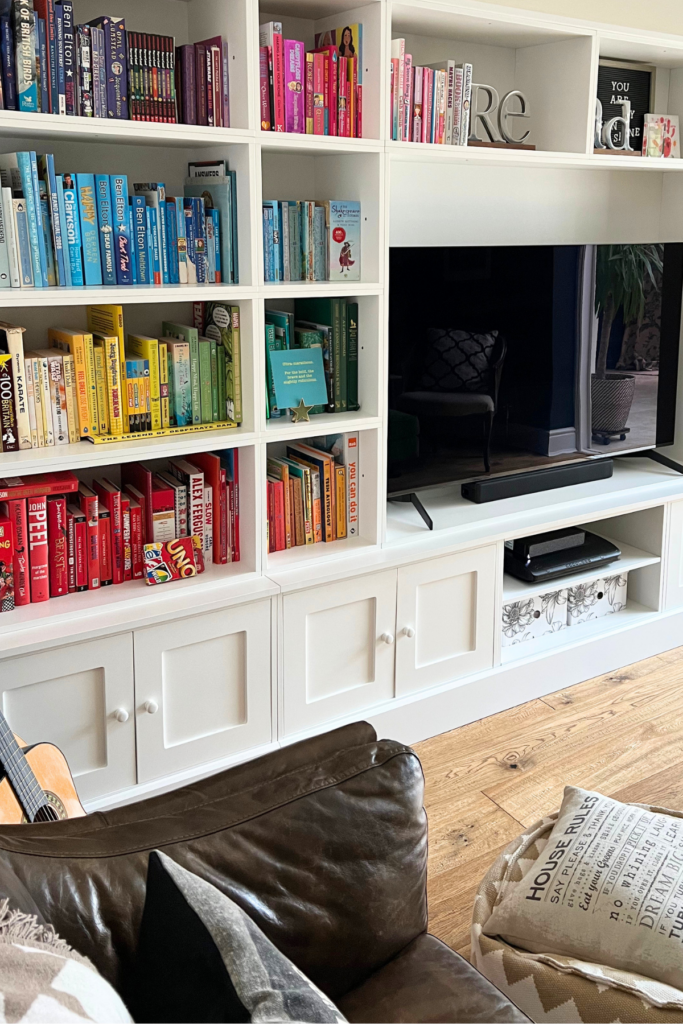
But when I thought about it, there was a different solution available that COULD work…
In fact – it’s sorted into rainbow order in that different way – and is still working a treat years later.
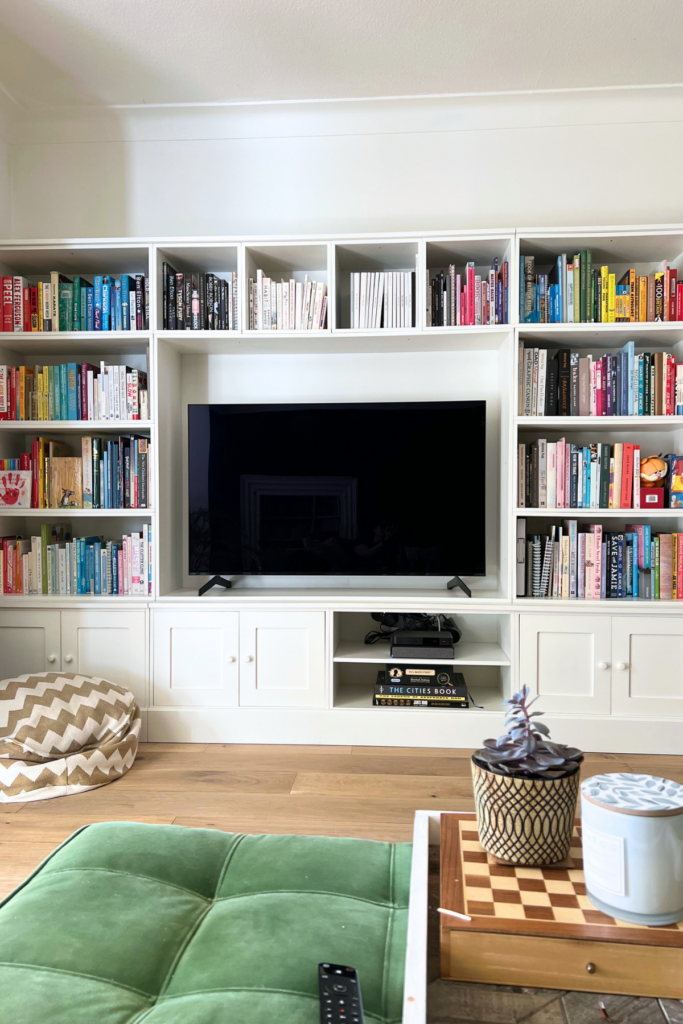
What’s different?: Because there are distinct sections, I was able to split the books by what they actually ARE first (i.e. recipe books, travel books, fiction, non-fiction, family photo books, work books etc…), and give each genre a section of it’s own.
Only THEN did I let each small section run red to orange to yellow etc….
And when you step back – because each section is colour coded – the whole thing reads as one big rainbow from across the room.
But it’s still really easy to find what we need, because each section is small.
Function came first, and the look sat on top of it, not instead of it.
What I Recommend And Do Myself:
Always always ALWAYS set a space up so it works properly first.
Only then look at making it as beautiful as you want (colour coding being a valid option IF it doesn’t stop the function from being optimal) – staying within those constraints.
Do it in that order, every time.
2 – Decanting Everything
I get the appeal of a pantry full of matching jars – I really do. It’s the kind of photo that makes you want to reorganise your entire kitchen on a Sunday afternoon for no reason at all.
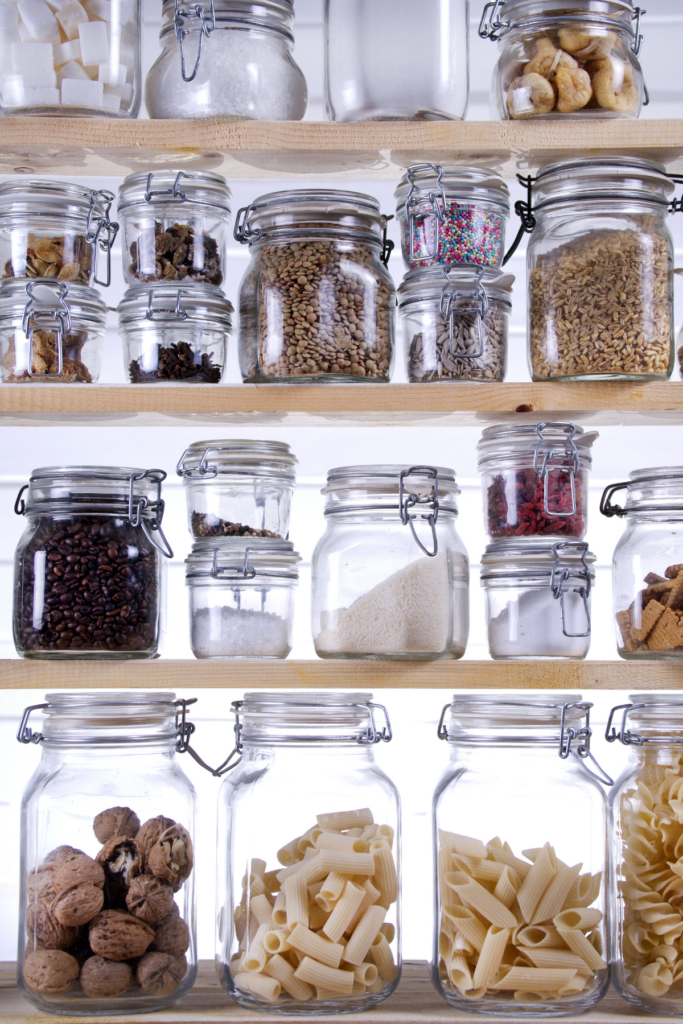
In fact – I’ve got a few unfinished projects of my own in this area – with a strong desire to make everything uniform and ‘calm’ to look at. It’s an attractive proposition for sure.
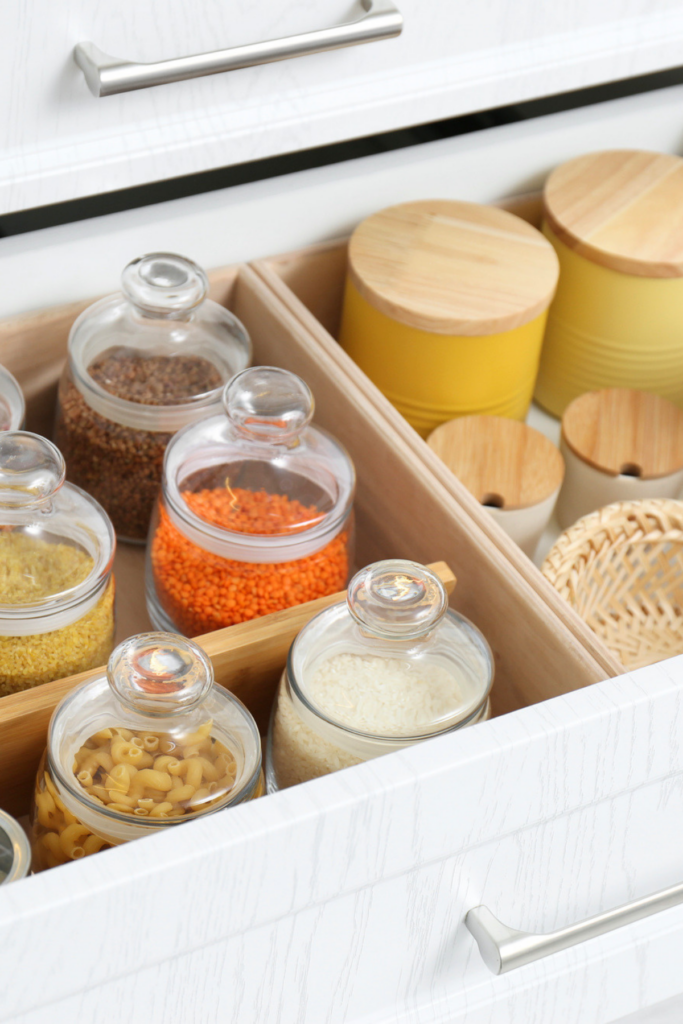
The problem: The minute you decant something, you’re separating it from its packaging – and that packaging was doing more work than it gets credit for. Best before dates. Ingredients. etc…
If you’ve ever had a guest with an allergy stood in your kitchen asking what’s actually in something, you’ll know exactly why that matters.
Why it’s an issue: So now you’ve got two choices, and neither is the effortless dream the photo promised. Either you cut the relevant bit off the packaging and tape it to the bottom or back of the jar, or you write it all out yourself with a wipeable marker.
Both take time and energy you didn’t have to spend before. And neither is reliable long-term – marker rubs off, taped-on labels fall off in the back of a cupboard, and suddenly your beautifully decanted jar is a mystery again.
Then there’s the bits that never quite fit the nice jar – the last third of a bag, the odd half-used pack. Those have to live somewhere, and “somewhere” usually means a different cupboard entirely.
So you’ve still got mismatched packaging knocking about, just now in two places instead of one. That’s not more organised. It’s just better looking (from a certain angle – don’t look behind the jars though!).
And that’s why I stay far away from decanting everything in my pantry – it’s just not creating the ease as much as you’d initially think.
When It Could Make Sense Anyway:
The times when you use something constantly and the original packaging is genuinely a pain, are the best times to decant into something.
Why?
Mainly because you’re HELPING it function better, rather than adding extra steps that actually end up making it feel more awkward.
For example – a nice looking jar for coffee by the kettle (because you buy coffee in bulk and have storage for it in the cupboard below (with best before date on) – but it’s quicker to use it from the jar in the morning.
Or what about a pump dispenser for soap in the bathroom? This is easy to keep clean, dispenses the right amount, and looks pretty by the sink. You also don’t have to worry about best before dates with things like this.
Basically use it in small places around your home, when it truly makes life easier than not using it.
What I Recommend And Do Myself:
I now only decant when there’s a genuine daily reason to – not because the internet said matching jars look nice.
And I decant into items that fit the entire pack of whatever I decant. No extra to store – a lot cleaner!
And I make sure I always keep the original packaging (or the relevant information from it), anywhere allergens or dates actually matter.
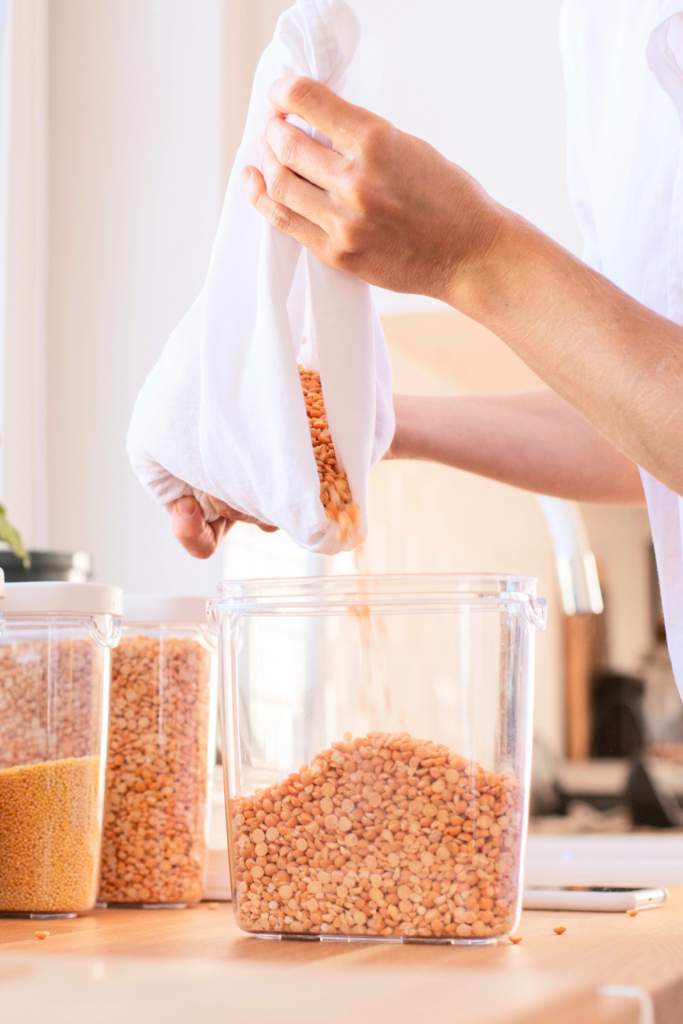
3 – Stockpiling
I understand the pull of never running out of something. It’s tempting to stock up on stuff – especially when you see a great deal.
Trouble is – I now avoid it mostly, because it came to a head in my house a few years ago…
I was the one doing our weekly shop – and I had started to use online supermarket shopping that was delivered to our door.
After a while, I had a list of my ‘usual’ shop saved in their system – and when I started my shop, I started with that. And I started to add in most things without thinking…
Cut to my Husband helping put things away one day after they were delivered – and finding a cupboard jammed FULL of washing up liquid. Around 20 bottles. Just because I hadn’t remember to take them off the shop each time.
We were basically wasting space, and money – and it was the wake up call I needed!
The problem: A home full of bulk-bought supplies means a chunk of storage permanently given over to “just in case” – the opportunity to forget what you’ve got – AND a rotation problem, where things expire at the back while you buy more of the same thing at the front, because you genuinely couldn’t see what you already had.
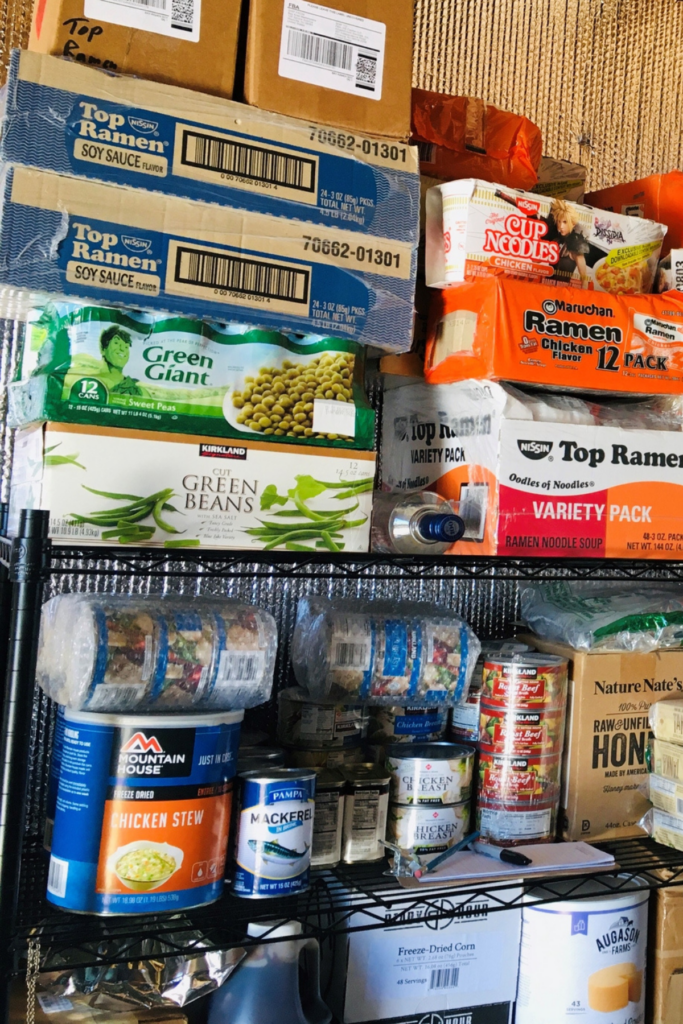
Why it’s an issue: Beyond the wasted space and wasted food, there’s an atmosphere it creates – a cupboard that won’t quite shut, a sense that there’s too much, even if you can’t say exactly where.
And if you stockpile something you later go off using, you end up having to use it anyway, out of obligation, which makes a home feel heavy rather than helpful.
When it could make sense
There are always exceptions to the rule though, and it makes sense when you’ve used the same brand for years, it doesn’t go off, and it’s on sale.
That’s intentional stockpiling.
What I Recommend And Do
I tend to work with the space we have for each item. If there’s space for 1 or 2 ‘extras’ then I DO keep a small buffer of those things.
That’s enough that we’re not caught short, but not enough to take over.
4 – Strict Minimalism
I like some of the concepts of minimalism – namely only having what you need, keeping predominantly clear surfaces, and generally simplifying and streamlining as much as possible.
But ultimately, minimalism for me is a no-no.
The problem: The strict version has never worked for me – as it’s so very hard to do when real life hits.
Why it’s an issue: There are things in every home that make it yours – one cushion too many, the maps on the wall, the book pile that never quite gets put away etc…
These things to me aren’t clutter, they’re personality. And if you try and strip it all out to make the house look minimal – a home doesn’t feel as calm. To me, it feels a bit cold, and a bit anxious-making, if I’m honest.
When It Could Make Sense, And What I Do
I’m obviously all for decluttering – but only to the level that you feel happy with. That level is different for everyone, and trying to declutter to a minimalist standard can feel overwhelming and stop people in their tracks before even starting.
So instead, I always declutter with genuine intention – and remove ONLY what doesn’t serve us any longer. Then I stop.
What I prefer to move towards are what I consider much more balanced movements such as Essentialism and Simple Living / Slow Living.
The main idea I aim for now is to have nothing we don’t need right now, while protecting everything we do – not for “as little as possible” just for the sake of it.
For us, this is a much kinder brief, and a far more sustainable one.
5 – Rotating Seasonally
Over the years I see people (especially on Social Media) doing their seasonal clothes swaps, home decor updates, and generally rotating things every quarter like clockwork.
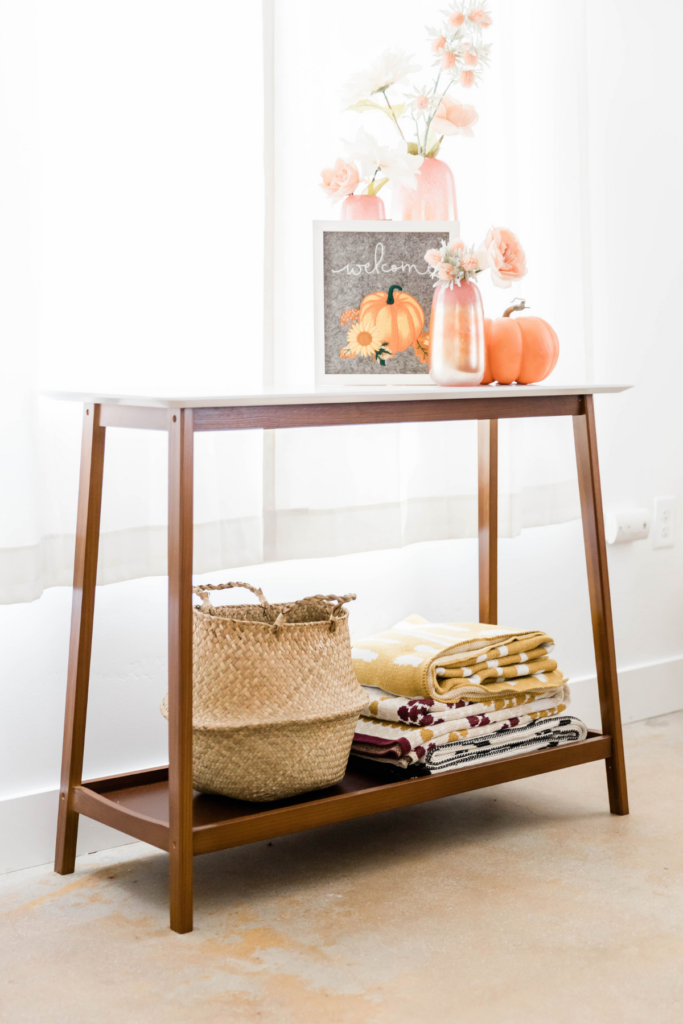
In theory, this sounds rather nice – giving everything a refresh, with autumnal tones arriving in September, fresh linens for the Spring, and a home that evolves as the year progresses.
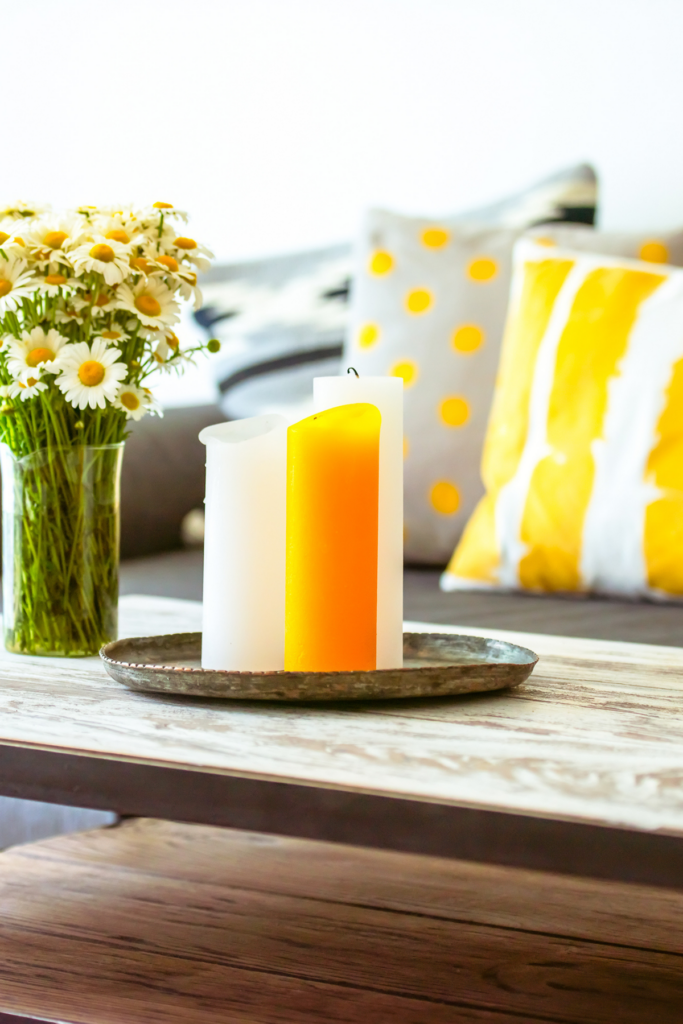
The problem: The fact that things are being updated each season means that for every season you’re currently in, you’re likely to be needing to store things for the other 3.
This can take up a LOT of space.
Plus – each season it’s a pretty big job to swap things over. A project that HAS to happen on schedule whether you’ve got the time and energy for it or not.
Not to mention when it comes to clothes (especially as I live in the UK), it’s hard to decide when to swap things over anyway. Seasons can easily run into each other and things may be needed at any time.
For example – that week in April where you’ve packed the jumpers away and it suddenly turns freezing again…
As such, I’m over trying to rotate things. It’s too much like hard work!
What I Do Instead
With clothes – I always wear layers, and keep my wardrobe the same year-round. I have access to everything should I need it – and I know at a glance what I own so I can keep track more easily.
With home decor I like doing a light edit rather than a full swap when seasons change. For example:
- Flowers or plants in a couple of places are updated to seasonally appropriate colours / types.
- I change 1 or 2 cushion covers / and maybe a throw to more seasonal ones – which is enough for a room to feel refreshed without needing loads of storage. For Spring / Summer these are softer colours in lighter fabrics, and Autumn / Winter bring more cosy textures and deeper tones.
- I update the scents used in cleaning products, candles, and diffusers. This gives a real sense of the season without needing to store a lot.
The main idea is to have a feeling of change but without the storage / maintenance overhead.
So there you have it – 5 things that are really popular, that I do differently or not at all.
What do you think? Agree or disagree?
Because that’s fine – none of these are wrong, exactly.
Some of them will work brilliantly for some people, in some homes. But the real lesson here is to know yourself – and understand that just because something’s popular, or photographs beautifully, it doesn’t mean it’s worth the upkeep for you.
And that’s fine!
Before you sink time, money, or weekly effort into anything you see in a magazine or online, use this as permission to ask yourself one thing: does this make my daily life easier while looking good, or does it just look good?
The truth is that a lot of those pictures that you see are done for the camera – and there’s usually a different story when we live with them for long.
If they’re not designed for daily life first – they’ll crumble – and your home won’t feel good at all.
Honestly? – Most of the ideas that genuinely make life easier tend to be considerably less Instagrammable than the ones that go viral.
For me, it’s function first, aesthetic second. I LOVE things to look good – but I refuse to live with something looking good that makes me work harder than I need to in my own home to upkeep it.
And ultimately, the best areas in your home are the ones that work for you – on a tired Tuesday, when nobody’s watching, and there’s nobody around to photograph it.
If you’re ready to set up a home that feels good for you – exactly as you like to live – then you’ll definitely want to check this out next…


