Painting Kitchen Cabinets Black – The Decision That Divided Everyone!
How a DIY kitchen makeover (painting kitchen cabinets black!) transformed a kitchen we’d fallen out of love with – the full story, the step-by-step process, the unexpected finishing touches, and my only regret with the entire thing.
* This post may contain affiliate links. They don't cost you a penny, but do pay a commission to this site.
Please click here for more details.
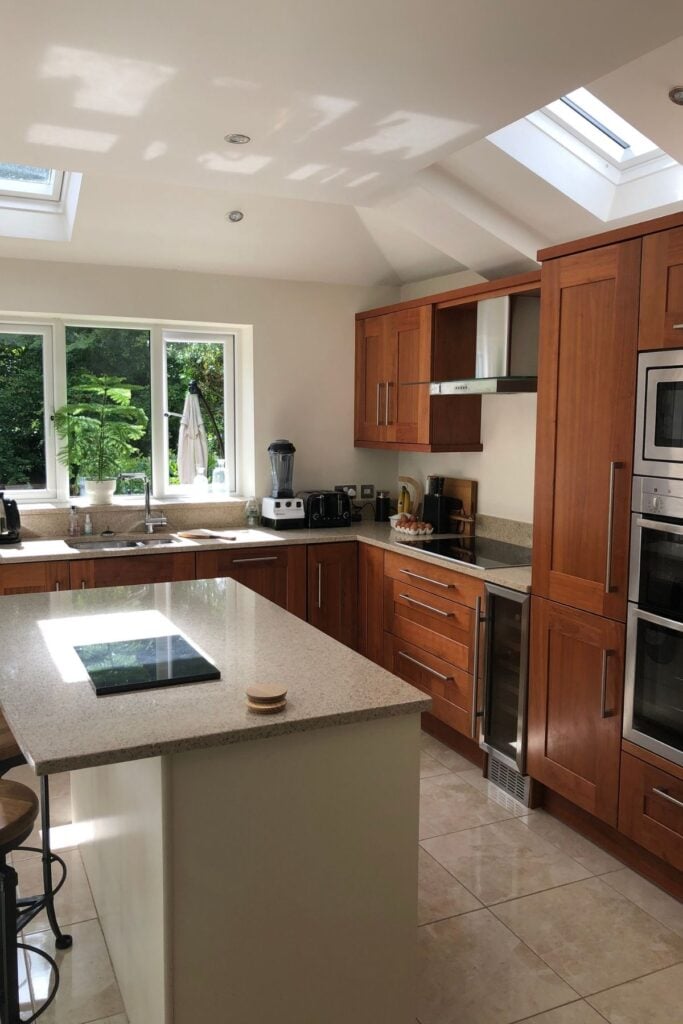
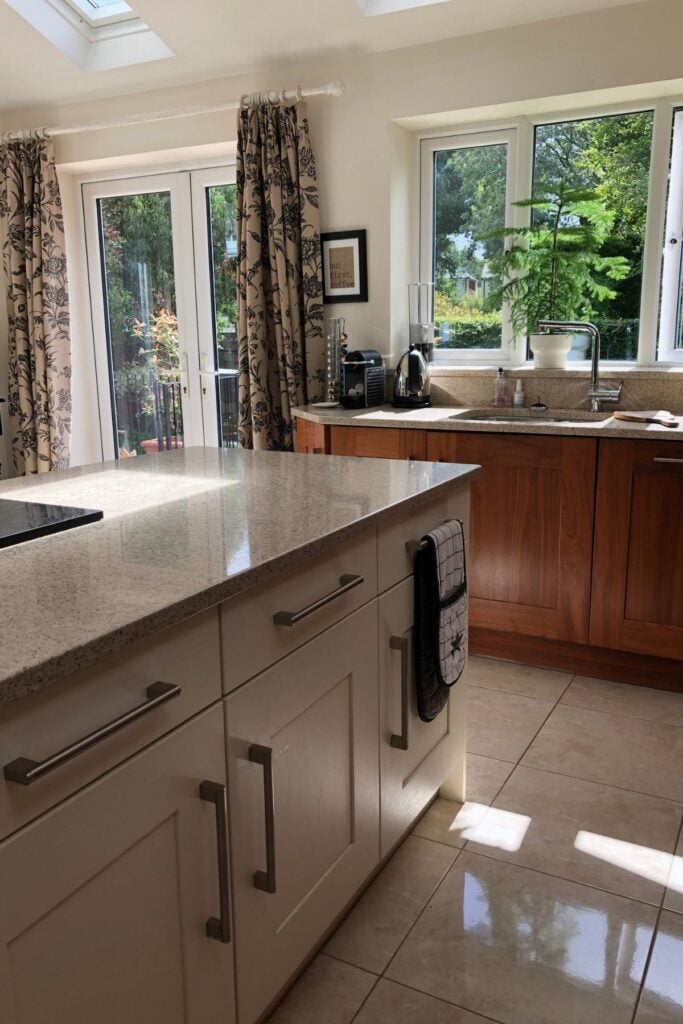
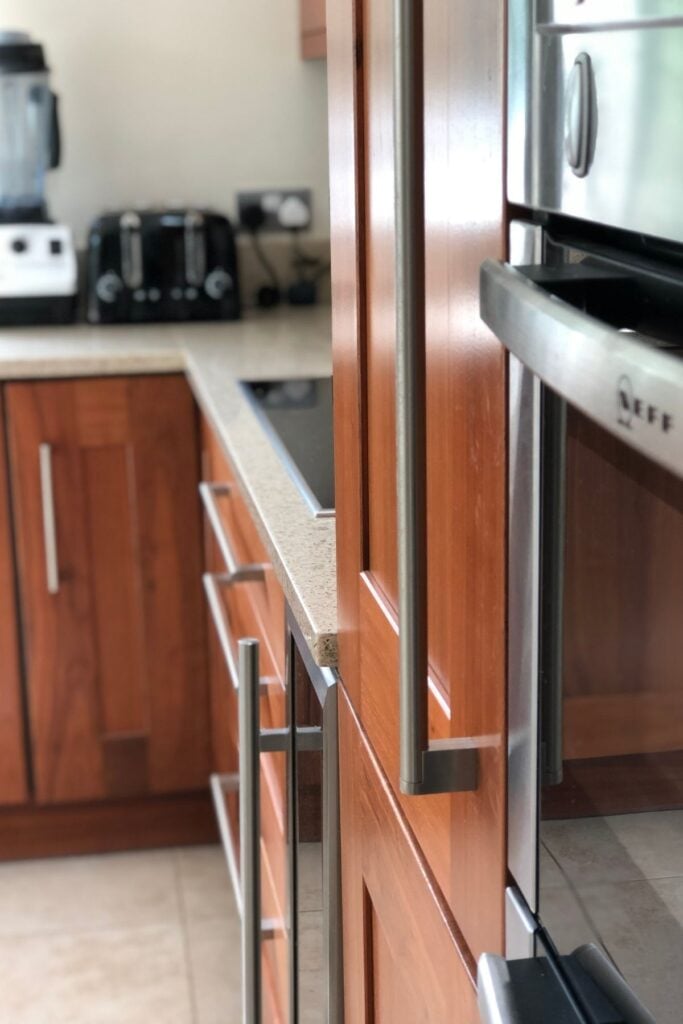
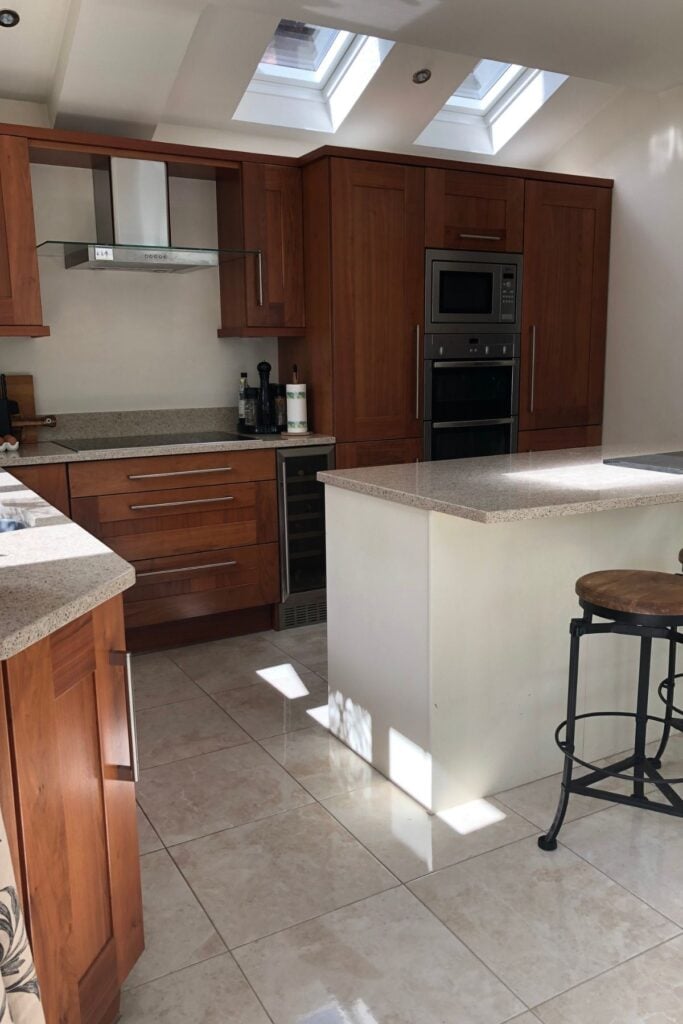
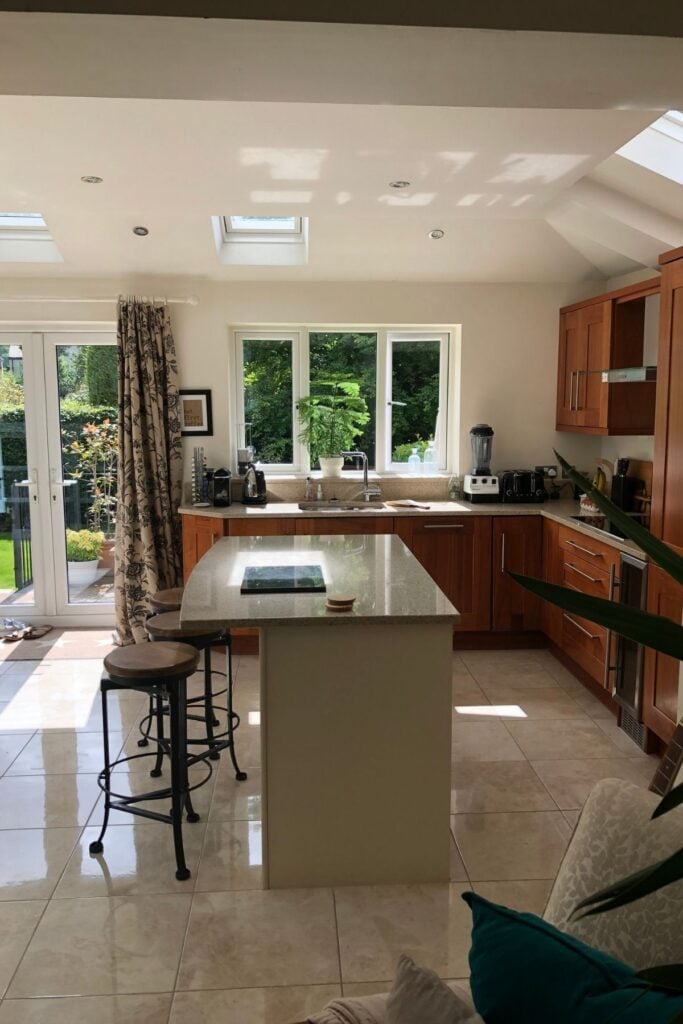
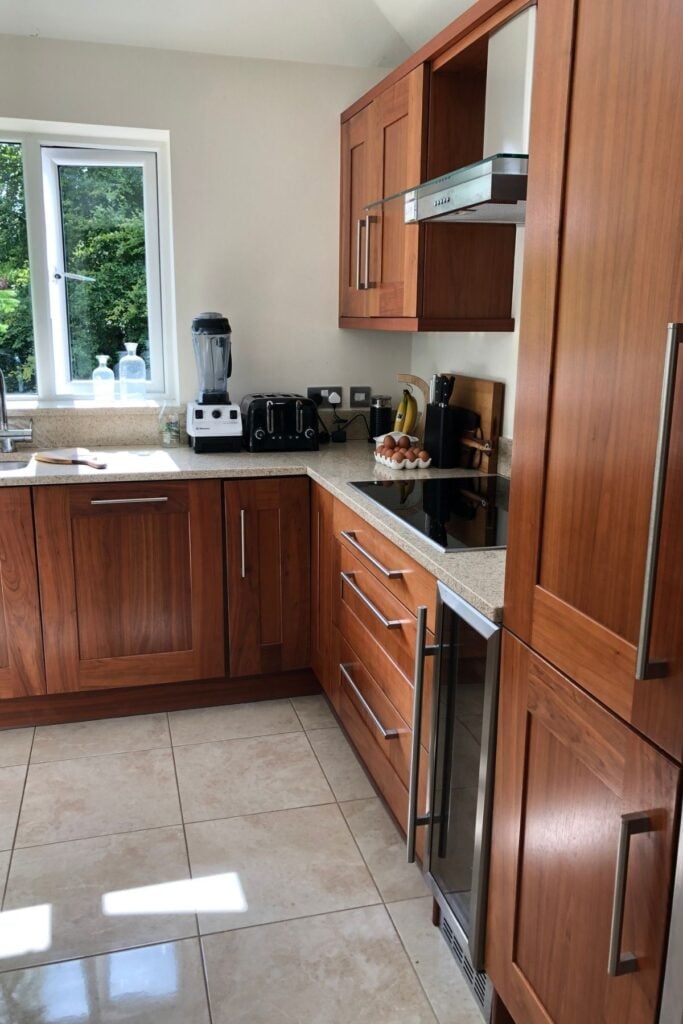
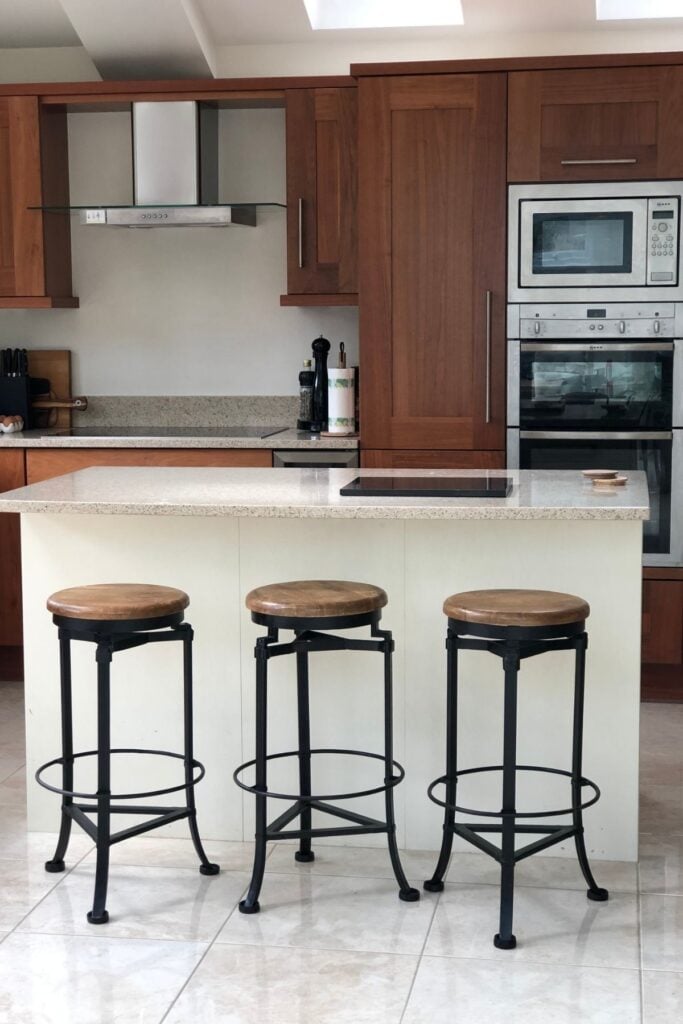
Our kitchen was a good one. Real wood, walnut finish, beautifully made.
We’d spent properly on it about twelve years before, and the layout was brilliant – I’ve never had a kitchen that worked better for actually cooking in.
But two things happened over time that I hadn’t seen coming:
- The first was that we’d bought it with one eye on resale value rather than purely on what we loved. Sensible, arguably – we thought we’d be selling within a few years. We weren’t wrong about the quality, but we were wrong about how long we’d be living with the choice. A kitchen that’s almost you but not quite is fine for a year or two. After a decade, it starts to nag.
- The second thing was the sun. Our kitchen gets beautiful morning light – which we love – but what we hadn’t considered when we chose a dark walnut finish is what years of bright sunlight does to wood. It fades it. And when walnut fades, it goes orange. A warm, golden, aggressively orange shade that is the polar opposite of everything I like aesthetically.
I really hate orange wood, so really, painting it wasn’t even a bold choice in the end. It was a rescue mission.
Why Choose Black?
Once I’d decided to paint it, black was the obvious answer.
We’d been moving the rest of the house in a darker, more dramatic direction – dark walls in the living room, shutters instead of curtains – and the kitchen was starting to feel out of step with everything around it.
Black also felt right for the industrial aesthetic we wanted. Not the cold, clinical kind – the warm, slightly worn, looks-like-it’s-always-been-there kind.
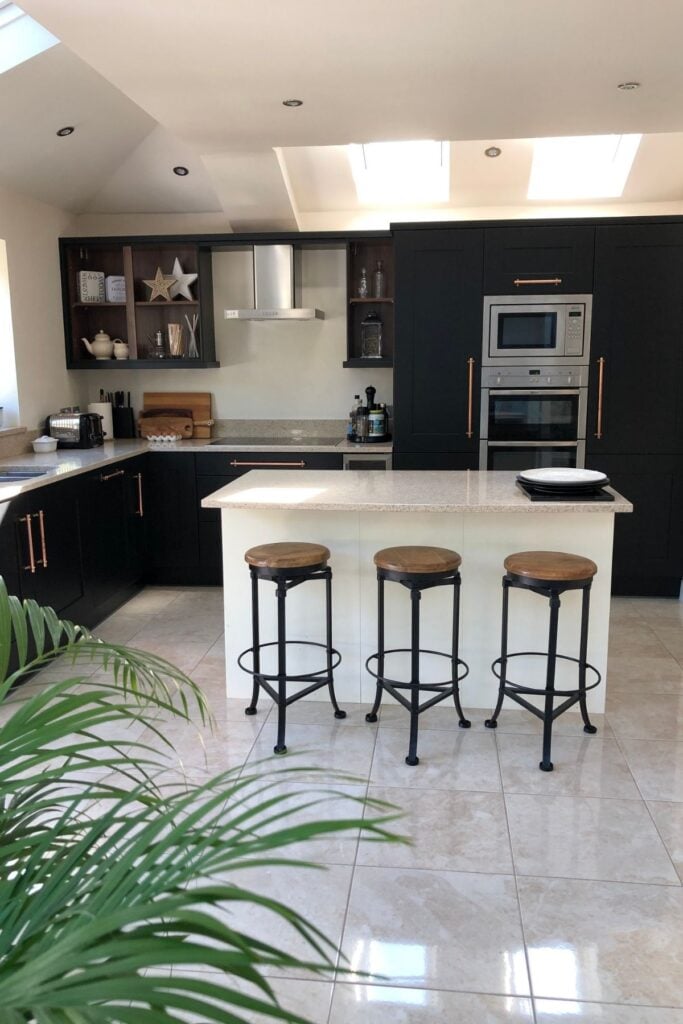
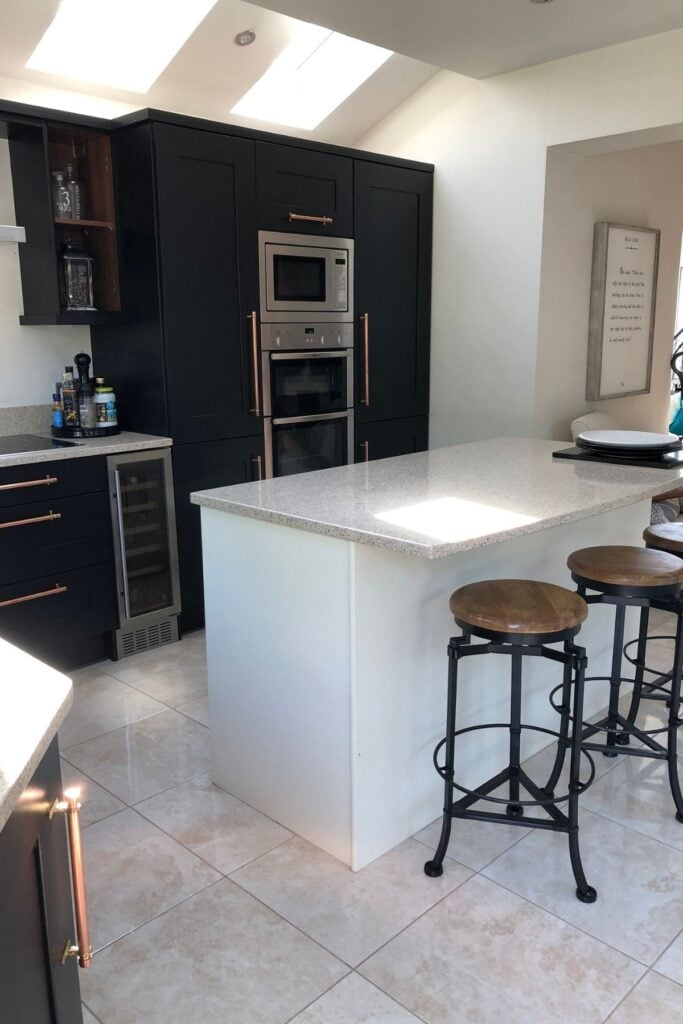
NOTE: The island units in the centre of the kitchen were ivory rather than walnut, and they were in perfectly good condition, so it was never the plan to paint these. I knew that the black perimeter cabinets and ivory island would work brilliantly together, as it was the same aesthetic as the dark wood against the ivory really. The split of dark and light units is definitely a combination I’d recommend.
Why Not Get Them Painted Professionally?
At first I looked at getting it done professionally (mostly on my Hubbys suggestion, as he didn’t want this to become a difficult project for either of us!).
The quotes were eye-watering though, and honestly, I wasn’t worried about tackling it myself really.
After all, I’ve painted pretty much everything in every house I’ve ever lived in and I know what I’m doing with a roller and a brush.
So I told Hubby I was going for it, and rolled my sleeves up.
What followed was a weekend project – and was worth every minute!.
Painting Kitchen Cabinets Black – The Full Step By Step Process
This isn’t a quick job, and I won’t pretend it is. But it’s also not complicated. Here’s exactly what I did, step by step.
Step 1: Test It Out First
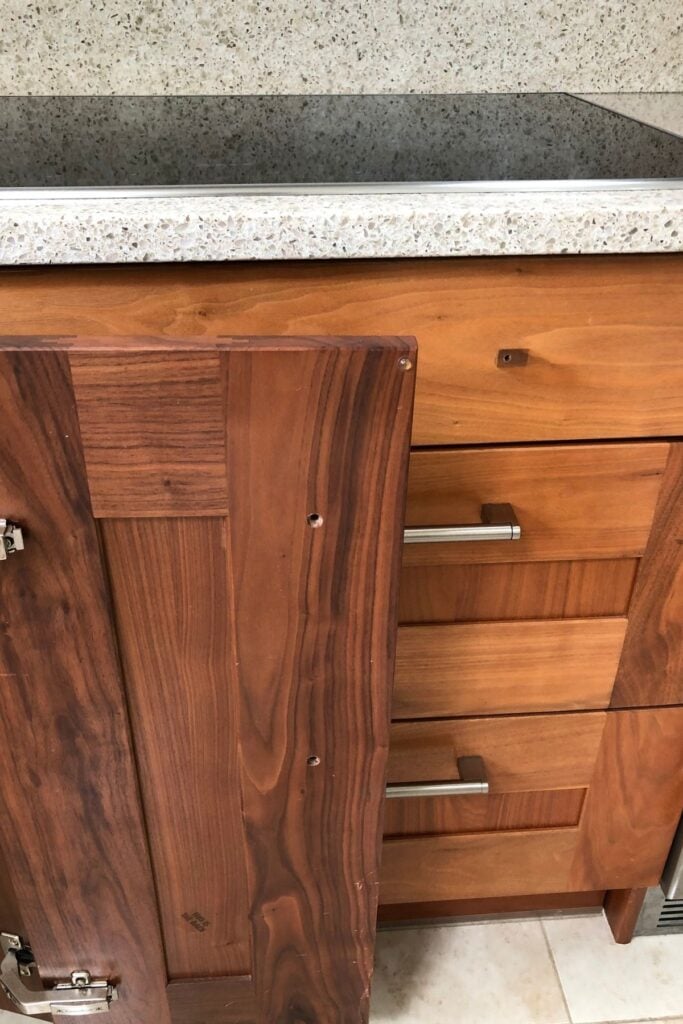
Before committing to the whole kitchen, I decided to do the sensible thing and test a single door first.
I picked a door that was least used, and worked on the inside of it only (that way it would be hidden from sight and barely noticed should it go wrong!).
Testing first wasn’t really about colour this time. Black is black (plus I’ve used Jack Black in my living rooms for some of the walls!) – so there would have been very little variance compared to if we’d done a cream or other colour. As such it was fine to keep it attached as I was looking more to see how the paint went on, how many coats would be needed, and how the finish looked when it dried.
I wanted to check it all before I got too deep into the task!
Try this: If you’re unsure of any part of painting your kitchen cupboard doors, then do it like this and allow yourself to live with the test door for a day or two before moving on. See how it looks in the morning light, the evening light, with the kitchen in use. You’re committing to this finish for years in all likelihood, so a couple of extra days of checking is the sensible thing to do.
Step 2: Take The Doors Off And Clean Thoroughly
Once the test had gone OK (phew!) I started the project in earnest.
Every door came off before I started painting, along with all handles (you could leave handles on if you wanted to paint around them, but honestly it’s quicker to take them off and then add them back on afterwards).
This was non-negotiable because trying to paint doors in situ is a recipe for drips, missed edges, and a finish that looks amateur.
Once off, I cleaned everything properly with Sugar Soap.
Kitchen cabinet doors accumulate years of cooking grease and residue that you can’t always see – and if you paint over it, the paint won’t adhere properly and you’ll know about it within weeks.
Clean first, properly, and the paint will last.
Top tip: Label every door and its location before you take anything off. A small piece of masking tape on the inside of each door with a number corresponding to its position takes two minutes and will save you a lot of head-scratching when it’s time to hang them all back up. Trust me!
Step 3: Sand Everything Down
Once cleaned and dried, I sanded all the doors and all the visible wood sections of the kitchen – the frames, the exposed panels, everything that was getting painted.
Sanding gives the primer something to grip onto.
Skip it and the paint sits on top of the surface rather than bonding with it. Yes, it’s tedious. Yes, it’s boring. Do it anyway. It’s worth it.
Step 4: Apply Primer
A good primer is the step most people are tempted to skip.
Don’t.
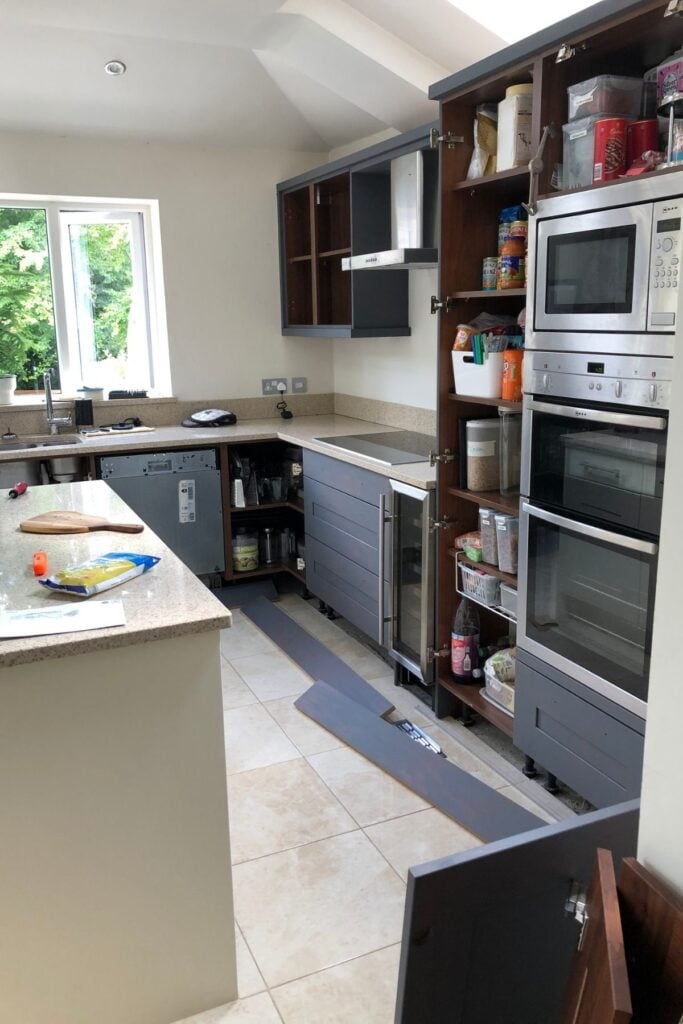
Especially on wood, especially going from a light finish to a dark colour, primer is what makes the difference between a paint job that lasts years and one that starts showing its age within months.
One even coat, allowed to dry fully before moving on.
Note: Ours was dark grey as it was the primer that went with the Black paint we chose. In hindsight it probably saved having to do at least 1 layer of the black (more expensive) paint as well.
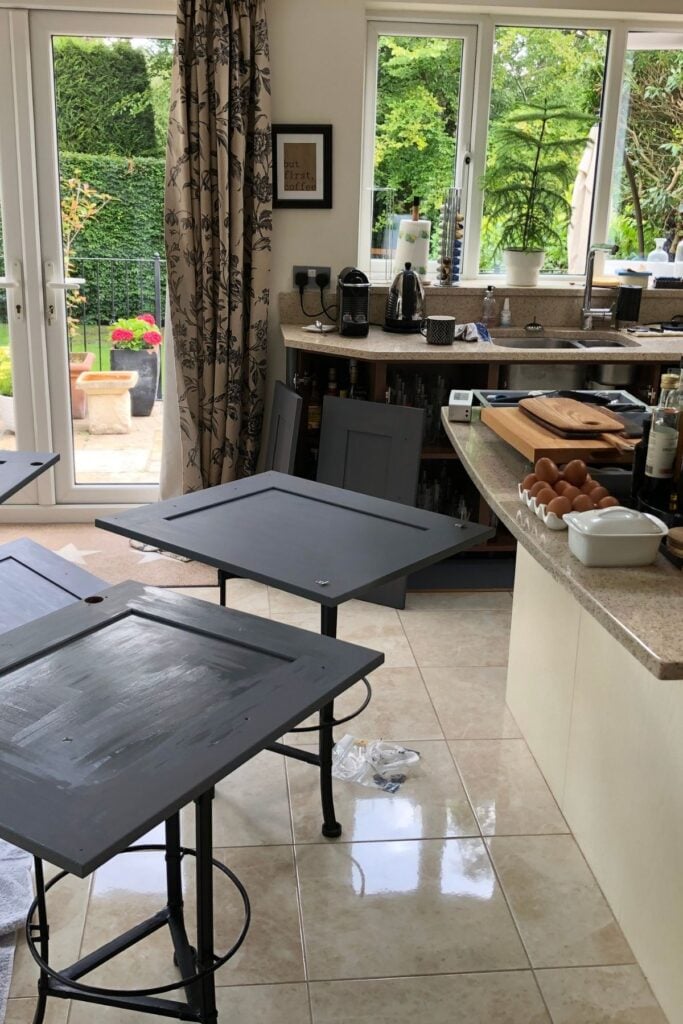
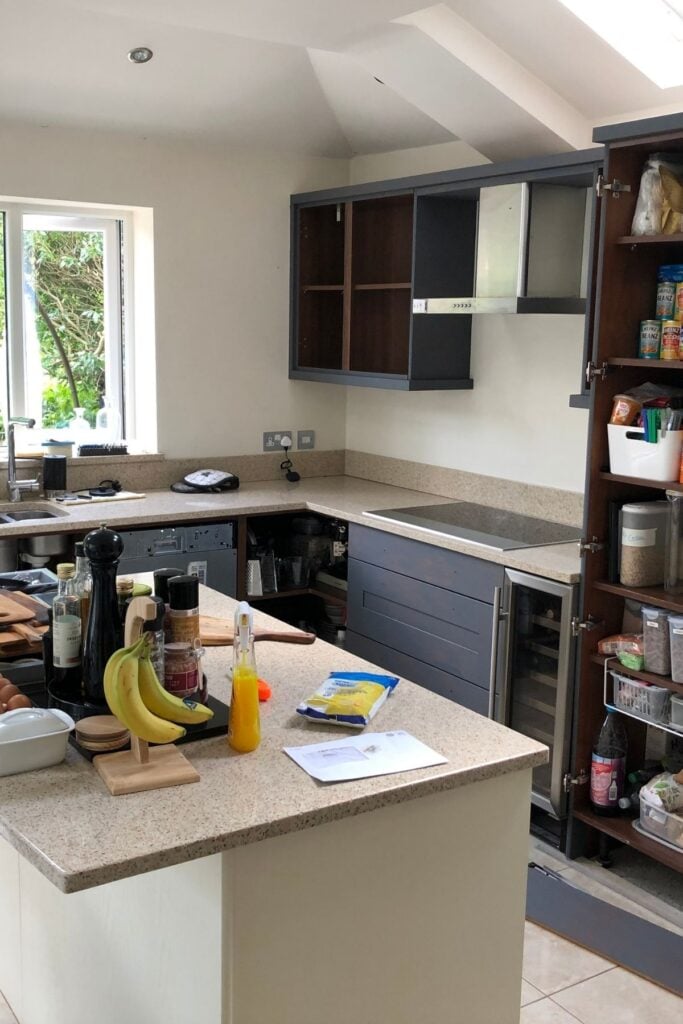
Step 5: Apply The Colour
The last step for the colour transformation is to apply the colour.
I chose ‘Jack Black’ from The Little Greene Paint Company (a brand I use 90% of the time in my house as it’s amazing quality).
The number of coats you’ll need will be dependant on the paint and the colour etc… – but I needed 2 to ensure that the black was really deep and dramatic.
I made sure each layer dried fully before adding the next.
TIP: For the final coat: use a roller, not a brush. A roller gives you an even, smooth finish without the brush marks that can show in flatter paint colours. It makes a genuine visible difference to the final result and takes no extra time.
TIP: For any detailed or moulded sections where the roller can’t reach, use a small brush (this is my favourite style as the angled edge means more easy to use in tricky places) – but keep the brush strokes in one direction and finish with the roller wherever you can.
Now you could stop there and be very happy – just put the doors back on and enjoy – but there are 3 other things I did that I’m going to add below, in case you want to do them too!
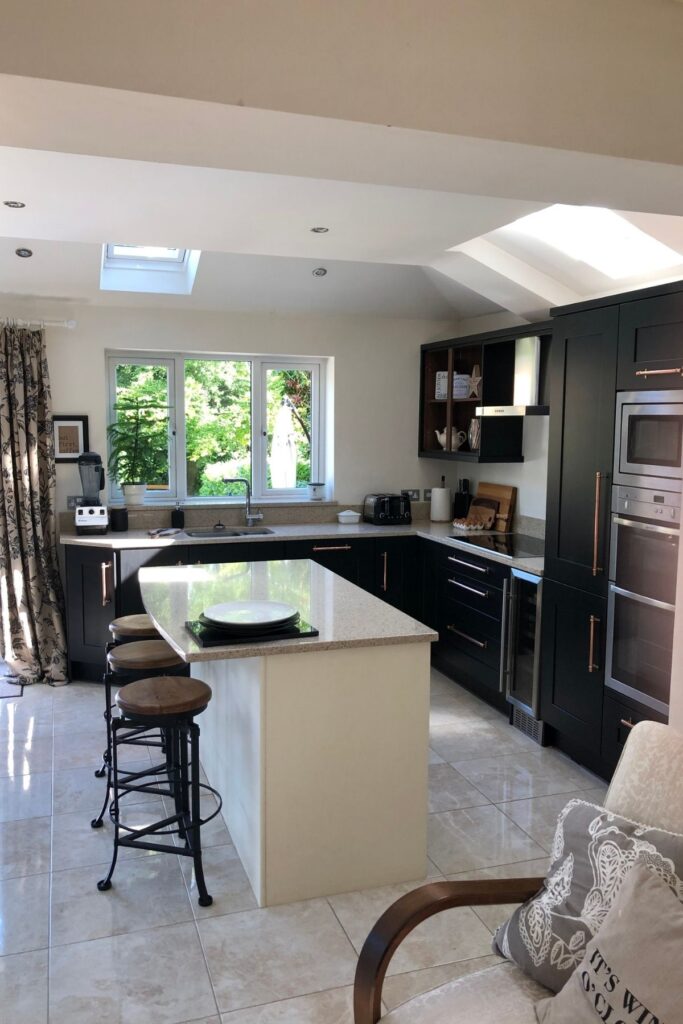
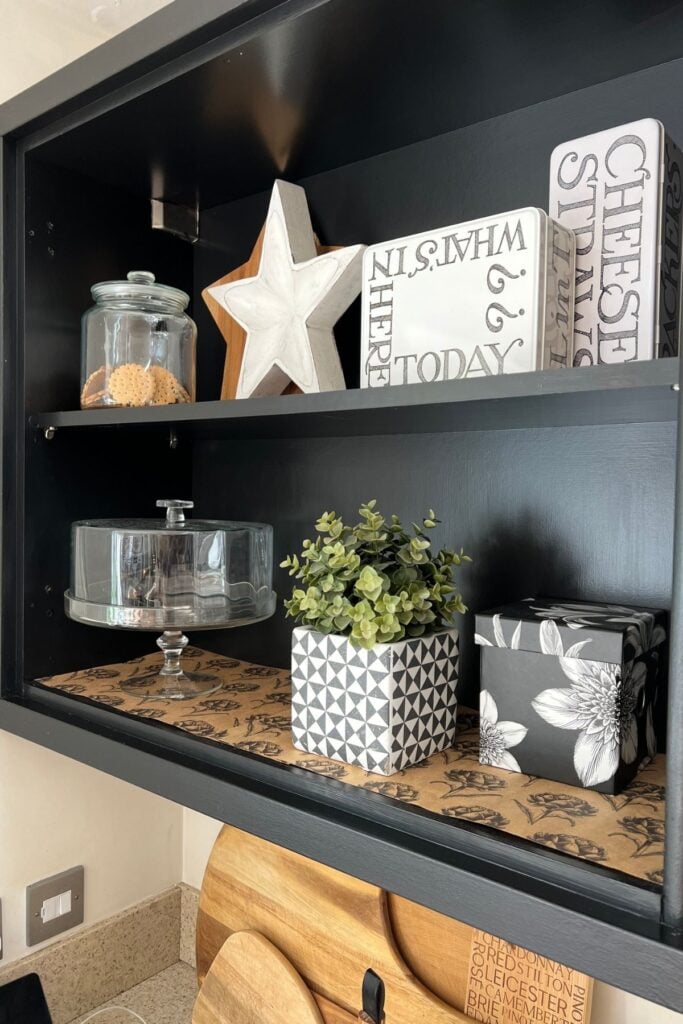
Step 6 (Optional): Remove Some Doors!
Once the paint was fully dry, I started to rehang all the doors, starting with the base units.
Then, I stood back and thought about the 2 wall units we have…
I’ve always liked the idea of having open shelves, but it would have been too messy for the walls to take these units off completely (and the top part of the units runs right the way across the top of that wall to hide the tech parts of the extractor fan, so it would look strange and unsightly.
But… as I looked at the wall units without the doors on them – I realised that it could give the look of an open shelf just by not reattaching the doors.
So – I did that!
I left the inside as the wood, as I liked the contrast (and that hadn’t been affected by the sun at all (and was unlikely to be because of the angle of where the sun would hit).
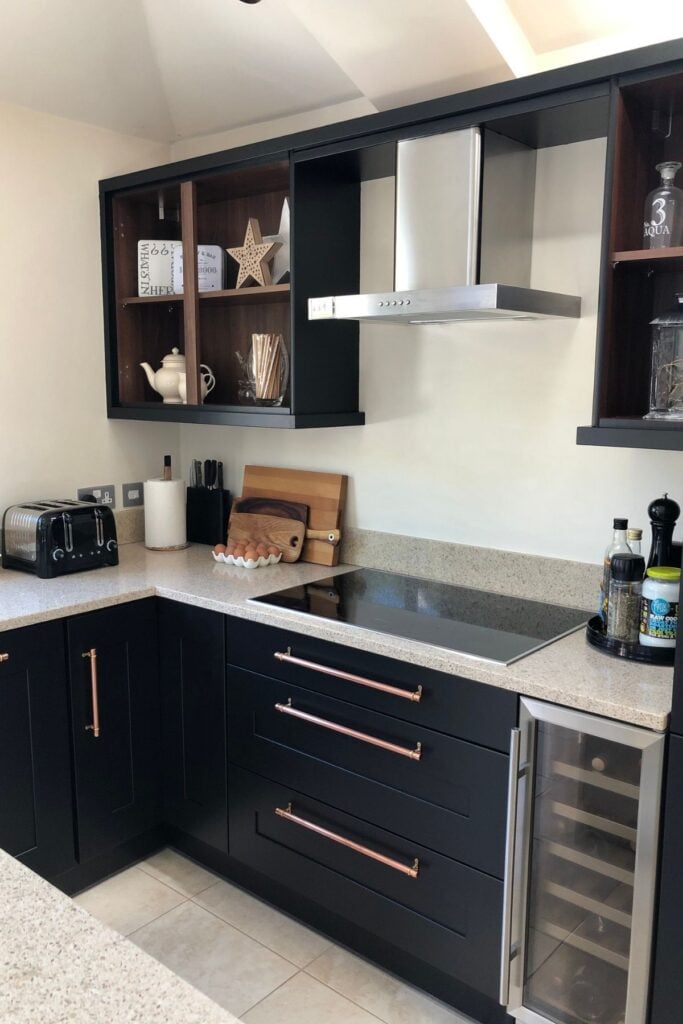
First it was a test, and we kept the doors and handles for a while just in case we wanted them back – but we love the look of the open unit now and it’s staying!
NOTE: I also removed the central slat once we decided the doors weren’t going back. This created even more of a shelf-like look.
Step 7 (Optional): Distress Strategically
This was an extra step that you may or may not want (dependant on your style) – but it honestly made the project for me.
Once all doors were back in situ, I thought about what areas would get the most use over time, and then lightly sanded through the paint in places – just enough to let a little of the wood beneath show through.
The effect is that it looks like the kitchen has been painted for years, and that the paint has gently worn away with use in the high-traffic spots.
It looks intentional. It looks characterful. And the added bonus is that it means that any genuine chips or knocks from day-to-day use blend right in rather than standing out as damage.
We wanted an industrial feel, and this gave it to us completely. It’s now one of my favourite things about the kitchen.
TIP: Use fine sandpaper for this step and go carefully – you’re aiming for subtle wear, not stripping it back. Do the edges of doors first where real wear would happen naturally. Stand back regularly and check the effect as you go.
Step 8 (Optional): Add New Handles
New handles were always part of the plan, and they completed the transformation entirely.
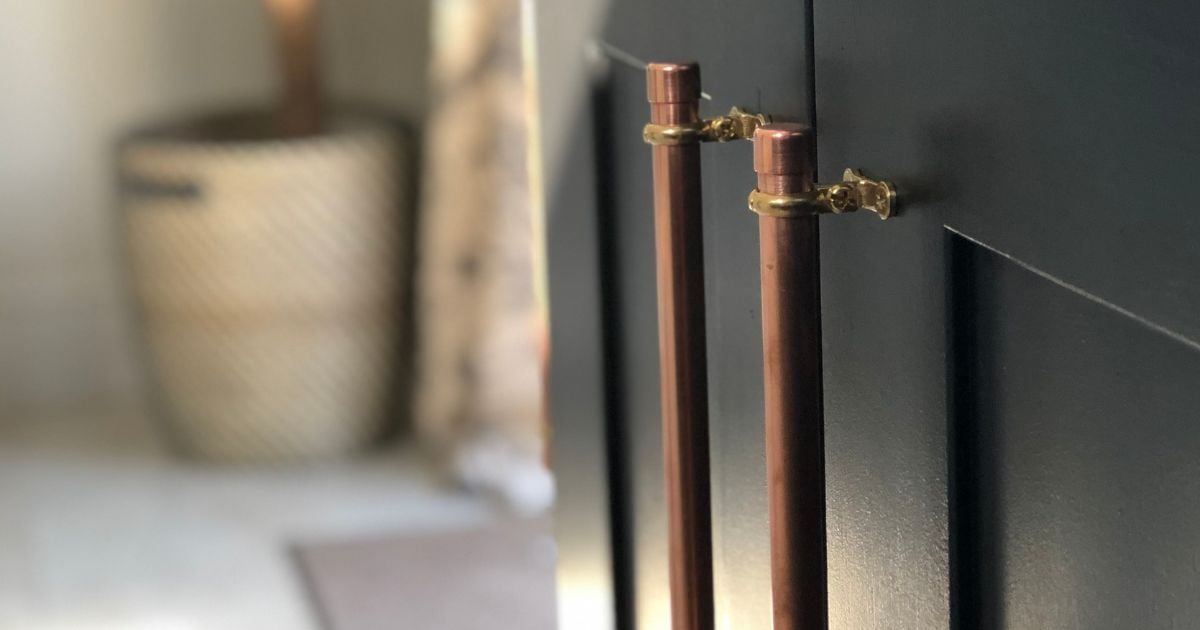
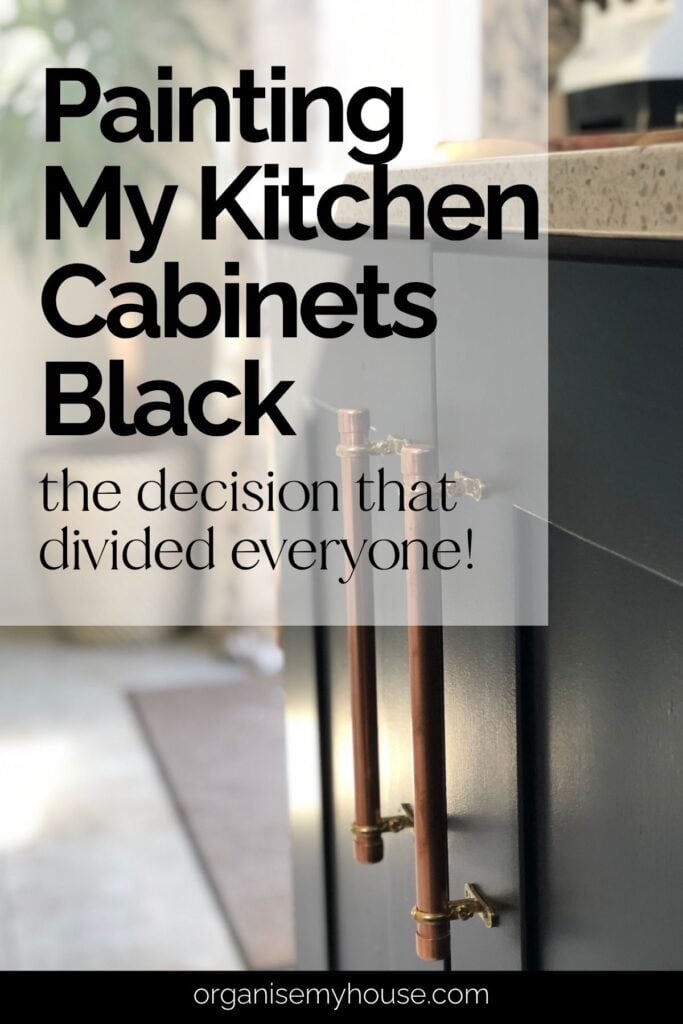
We chose handmade copper handles from Etsy.
They were beautiful – proper artisan pieces, warm against the black, exactly the industrial-with-warmth look we were after.
They also felt special in a way that mass-produced handles simply don’t, and they weren’t as expensive as you’d expect for something handmade.
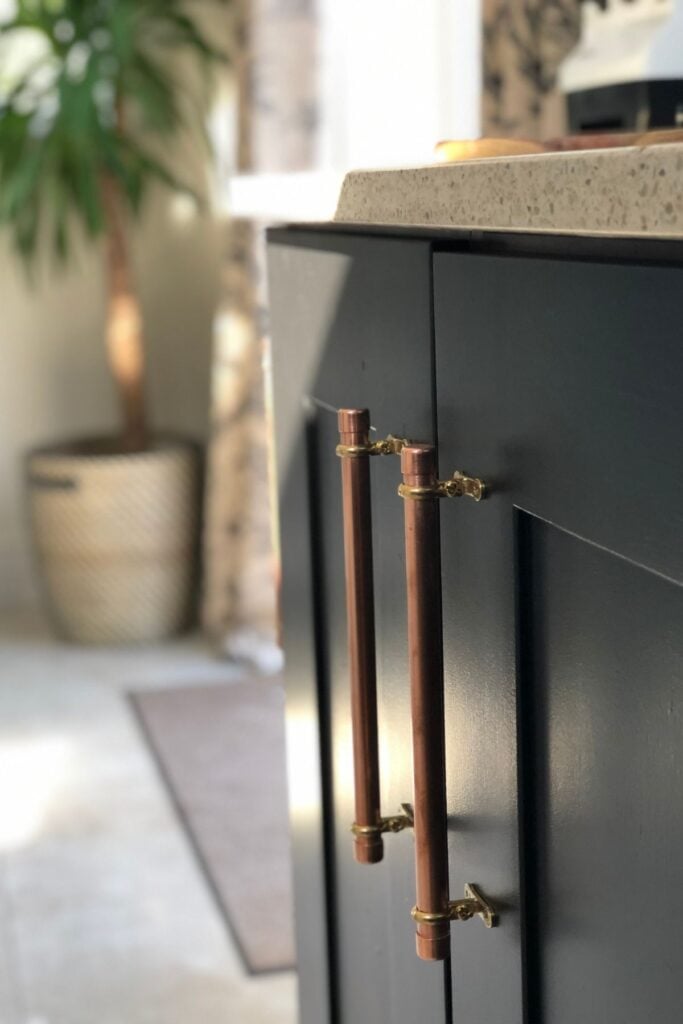
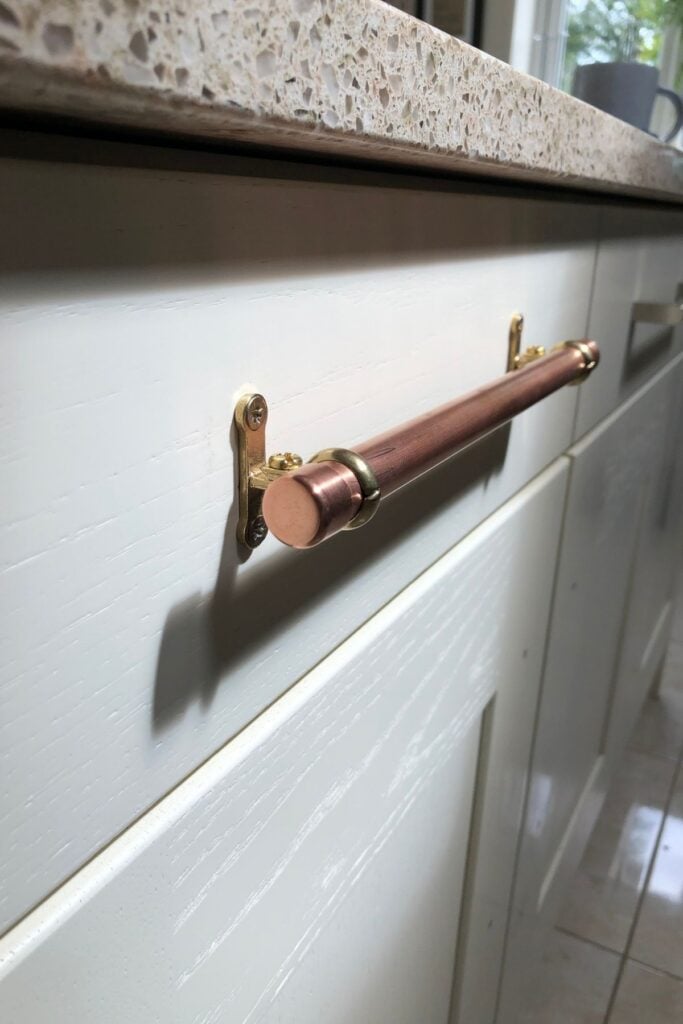
TIP: I wish I had coated these in a protector or matt varnish of some sorts (not sure exactly what as I never did it…) as they do tarnish and go slightly green as copper naturally does – but it’s OK as they are easy to sand back to the bright copper, and the green tarnish works well anyway!
NOTE: Before you order handles, measure the existing hole spacing on your current handles (and if needed, the distance between the two fixing screws). Either order handles that match that spacing exactly, or be prepared to fill the old holes, sand smooth, prime, and repaint before drilling new ones. Getting this wrong is an annoying and avoidable extra step.
NOTE: I DID change the island handles as well as the ones I painted black – just for continuity.
Do I Regret It?
Every single person who knew about this project had an opinion beforehand. Most of them were sceptical. Several were genuinely concerned. Black? In a kitchen? Won’t it feel dark? Won’t it show everything? Won’t you regret it?
I’ve had my black kitchen for years now – and I’ve NEVER, not once, stood in it in the morning making a coffee and wished we’d gone with something else.
It feels exactly right. It looks exactly like ‘us’.
The copper handles catch the light. The worn edges give it character. The ivory island stops it feeling heavy. The whole room – finally – feels like it belongs to this house and to us.
So if you love the look of dark cabinets and you’ve been talking yourself out of it, stop.
The worst that happens is you paint them again. But in all likelihood, you’ll feel exactly like I do:
The only regret I have is why didn’t I do this sooner!
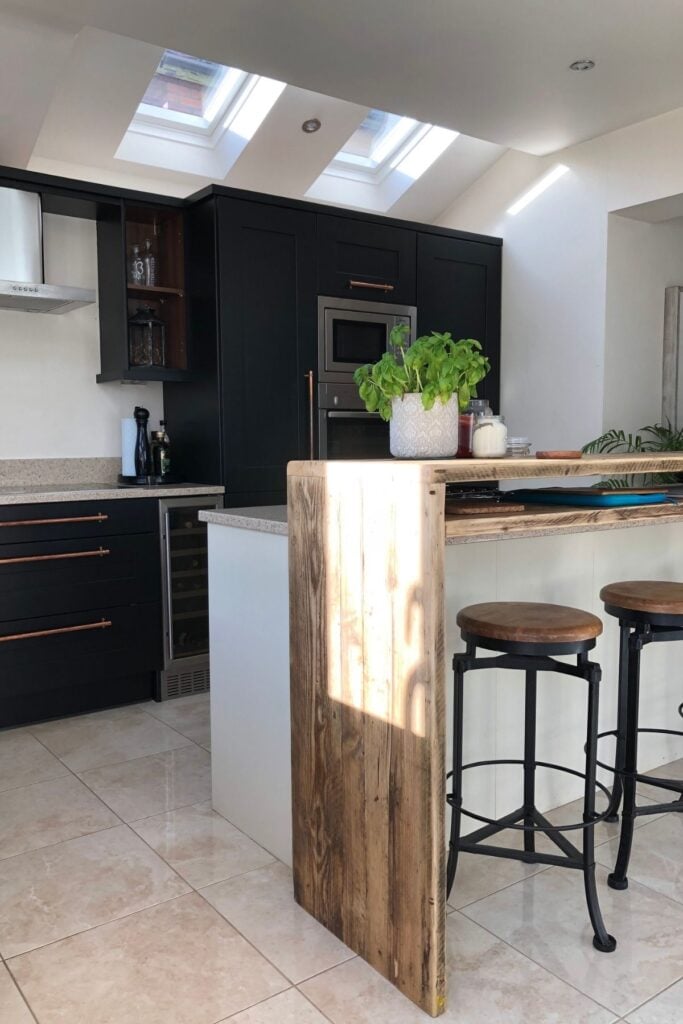
This is the ‘AFTER’ – and also shows the next project I added – the Kitchen Island extension. You can read all about that HERE.
And that’s it!
The kitchen that was almost us but not quite has become the kitchen that is completely, unapologetically ours.
A real wood kitchen we’d grown out of became something with personality, warmth, and a finish I’m proud of every time I walk in.
And I did it myself, over a weekend, for the cost of paint, primer, sandpaper, and some very beautiful copper handles from a maker on Etsy.
And remember, sometimes the boldest home decision is the one that finally makes it feel like yours...